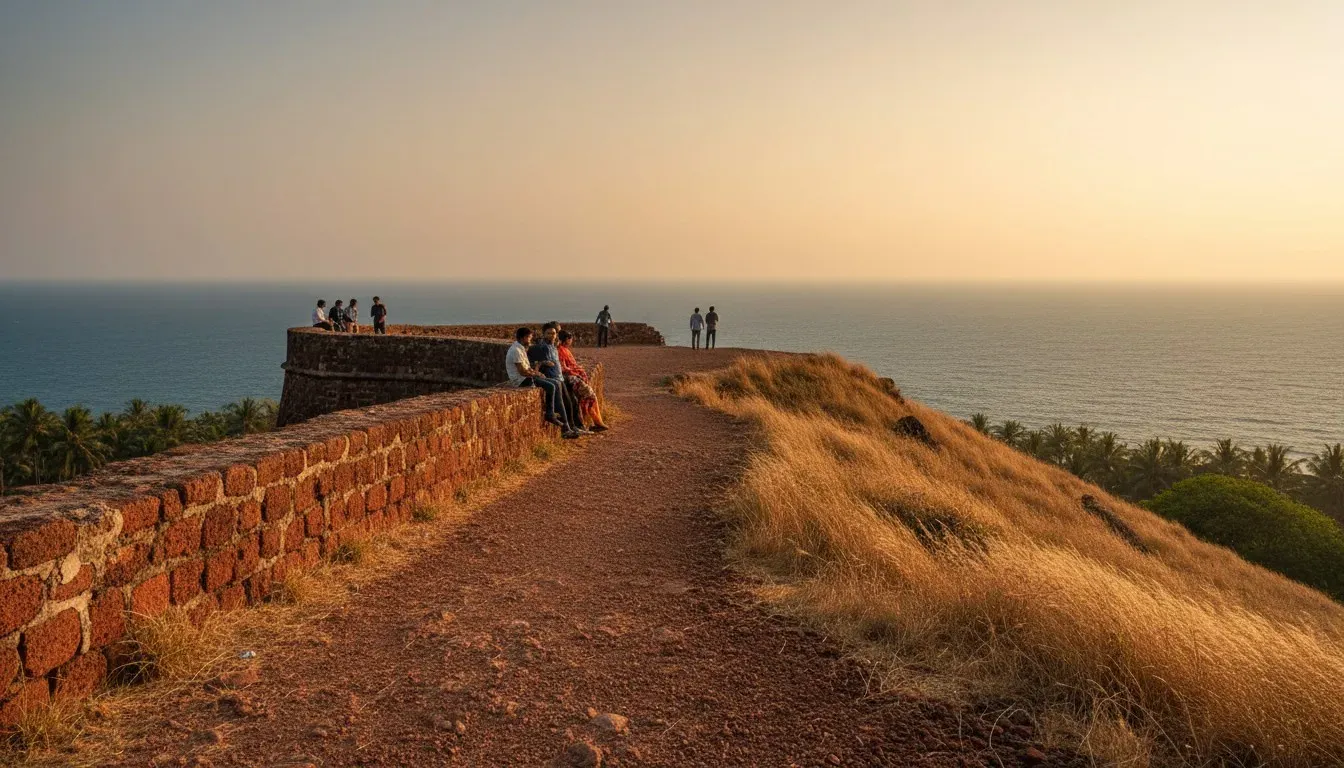


Chapora Fort stands on a prominent red laterite hill in Chapora village (hamlet of Caisua), Bardez taluka, North Goa. Administered as a state-protected monument by the Directorate of Archives and Archaeology, Government of Goa, the fort overlooks the Chapora River estuary, with Morjim Beach to the north and Vagator Beach directly to the south.
Widely known across India as the "Dil Chahta Hai Fort" after appearing in the 2001 film, the site features surviving 18th-century ramparts, bastions, and wide views across the Arabian Sea. Entry to the fort is completely free of charge.
This guide outlines visiting hours, the uphill walk from the parking area, transit routes, heritage rules, and practical advice to help plan your visit.
Timings, Admission, and Visit Duration
Chapora Fort is open to visitors every day of the week. Entry is free for all visitors, with no ticket required.
A standard visit takes approximately 45 to 90 minutes, which allows enough time to climb the path, explore the remaining ramparts, and return to the base. The site can be visited independently or as part of a wider day route like the North Goa Tour (₹400 per person) or a customized North Goa itinerary.
- Official hours: 9:30 AM to 5:30 PM, Monday through Sunday
- Entry fee: Free (₹0) for Indian and foreign nationals
- Recommended duration: 45 to 90 minutes
- Security: Staff instruct visitors to exit at dusk because the monument has no artificial lighting
How to Reach Chapora Fort and Parking Rates
Chapora Fort is located in North Goa, roughly 10 km northwest of Mapusa and 20 to 22 km north of Panaji. Public buses run by the Kadamba Transport Corporation (KTC) and private operators connect the Mapusa Bus Stand to Vagator and Chapora, costing between ₹20 and ₹40 per passenger. One-way private taxi fares from Panaji to the fort generally range from ₹500 to ₹800.
Vehicles can drive directly up to the base parking area at the foot of the hill, where managed parking facilities are available before the walking trail begins.
- Two-wheeler parking: ₹20
- Four-wheeler parking: ₹50
| Transit Hub / Starting Point | Distance | Estimated Drive Time |
|---|---|---|
| Mapusa (KTC Bus Stand) | 10 to 11 km | 20 to 25 minutes |
| Panaji (Panjim) | 20 to 22 km | 45 to 55 minutes via NH 66 |
| Thivim Railway Station | 19 to 21 km | 35 to 45 minutes |
| Manohar International Airport, Mopa (GOX) | 28 to 30 km | 45 to 60 minutes |
| Goa International Airport, Dabolim (GOI) | 43 to 45 km | 1 hour 15 minutes to 1 hour 30 minutes |
| Vasco da Gama Railway Station | 46 km | 1 hour 30 minutes |
The Ascent and Accessibility

From the vehicular parking area at the base, visitors must walk an uphill pathway of roughly 200 to 300 metres to reach the main entrance gate. The ascent takes about 10 to 15 minutes.
The route is not wheelchair-accessible. The path consists of steep sections, loose laterite gravel, and uneven stone steps. Footwear with good grip, such as running shoes or hiking sandals, is strongly recommended to navigate the loose scree and rocky surfaces.
History and Rampart Architecture
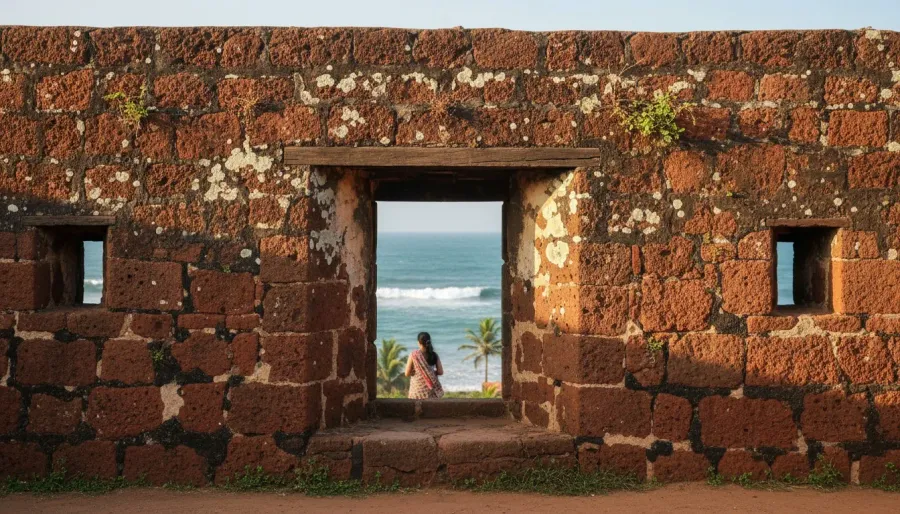
The site was first fortified in the 16th century by Sultan Adil Shah of Bijapur and was originally known as "Shahpura" (meaning "town of the Shah"). In 1683, the Maratha ruler Chhatrapati Sambhaji Maharaj took possession of the fort from Portuguese forces without armed conflict.
The red laterite fortifications standing today were rebuilt by Portuguese colonial authorities in 1717 to defend against invasions from the north. The Bhonsles of Sawantwadi captured the fort in 1739, holding it until Portuguese forces retook it in 1741. In 1892, the Portuguese military permanently abandoned the outpost after Goa's northern borders expanded into Pernem.
The remaining ruins feature perimeter walls built from red laterite stone, bastions, cannon embrasures, gun slits, and underground escape passages.
Heritage Rules and Safety Regulations
Chapora Fort is protected under Goa state heritage preservation rules and the Goa Tourist Places (Protection and Maintenance) Act. These regulations are enforced by on-site authorities.
There are no safety railings or barricades along the high cliffside ramparts. The drop-offs facing the Arabian Sea and the Chapora River are sheer, so visitors must keep a safe distance from the edge of the stone walls.
- Defacing walls, structural damage, or painting graffiti on the laterite masonry is strictly illegal
- Consuming alcohol, outdoor cooking, and littering on monument grounds are prohibited by law
- Violations carry spot fines starting from ₹2,000 for individuals and up to ₹10,000 for groups
- There are no public toilets, running drinking water, or weather shelters inside the ruins
- Informal vendors sell bottled water, tender coconut, and cold beverages at the base parking lot and lower trail
Best Time to Visit and Weather Tips
The ideal time of year to visit is the winter dry season from November to February. During these months, rains have ceased and daytime temperatures generally range between 20°C and 32°C. For broader seasonal trends across the state, read our guide on the best time to visit Goa.
During any season, the best visiting hours are early morning (8:00 AM to 10:00 AM) or late afternoon (4:30 PM to 6:00 PM). The open hilltop has no tree canopy or shade. Visiting between 11:00 AM and 3:30 PM exposes you to direct sun, making sunscreen, hats, and personal water bottles essential.
During the monsoon period from June to September, the laterite rocks and dirt paths become slick and hazardous, which significantly increases the risk of slipping.
Nearby Sights and Beaches
Chapora Fort is situated close to several coastal landmarks in North Goa, making it easy to combine with other stops featured in our places to visit in Goa guide and Goa beaches guide.
- Vagator Beach: 700 metres to 1 km south via Chapora Fort Road (roughly 1.5 to 2 km by road)
- Ozran Beach (Little Vagator): 2.5 km to 2.7 km south
- Chapora Fishing Village and Jetty: 1.5 km north along the river estuary
- Anjuna Beach and the venue of the Anjuna Flea Market: roughly 5 km to 5.5 km south
Book with GoaWala
3 options from ₹400 per person — live prices, October 2026.
- North Goa Tour — from ₹400 per person · 9 Hours · North Goa
- South Goa Tour — from ₹400 per person · 9 Hours · South Goa
- Extreme South Goa Tour — from ₹1,500 per person · 10 Hours · South Goa
Frequently asked questions
Is there an entry fee to visit Chapora Fort?
No, entry to Chapora Fort is completely free of charge (₹0) for both Indian and international visitors.
What are the opening hours of Chapora Fort?
Official visiting hours are from 9:30 AM to 5:30 PM, seven days a week. Security staff instruct visitors to leave at dusk because the site lacks artificial lighting.
Why is Chapora Fort called the Dil Chahta Hai Fort?
The fort gained that title in modern pop culture after key scenes from the 2001 Hindi film Dil Chahta Hai were filmed along its outer laterite walls.
How difficult is the walk up to Chapora Fort?
The climb from the base parking lot takes 10 to 15 minutes along a 200-to-300-metre path. The trail is steep, covered in loose laterite gravel, and is not wheelchair-accessible.
What are the parking charges at Chapora Fort?
Parking at the base of the hill costs ₹20 for two-wheelers and ₹50 for four-wheelers.
Are there washrooms or drinking water available inside the fort?
No, there are no public washrooms or running drinking water facilities inside the ruins. You can purchase bottled water and cold drinks from informal vendors at the base parking lot.
Can you drink alcohol or have a picnic at Chapora Fort?
No. Under the Goa Tourist Places Act, drinking alcohol, cooking, and littering on the premises are illegal and carry spot fines ranging from ₹2,000 for individuals to ₹10,000 for groups.
Sources
- oneboard.app
- travanya.com
- captureatrip.com
- tripoto.com
- oneboard.app
- trawell.in
- rome2rio.com
- explorebees.com
- makemytrip.com
- indiatimes.com
- goaholidayguide.com
- scribd.com
- heraldgoa.in
- mapcarta.com
- fabhotels.com
- goa-tourism.org.in
- tripoto.com
- placetiming.com
- myticketstoindia.com
- goa.gov.in
Last checked 9 October 2026
More in Places to Visit in Goa: Essential Sights and Visitor Guide
- Basilica of Bom Jesus, Old Goa: Visitor Guide
- Dudhsagar Falls: Safari Bookings, Costs, Timings, and Rules
- How to Visit Dudhsagar Falls: Complete Safari & Route Guide
- Fort Aguada: Timings, Entry Fees, History, and Visitor Guide
- Grande Island Goa: Diving, Boat Tours, and Trip Guide
- Spice Plantations in Goa: Visitors Guide, Farms & Costs