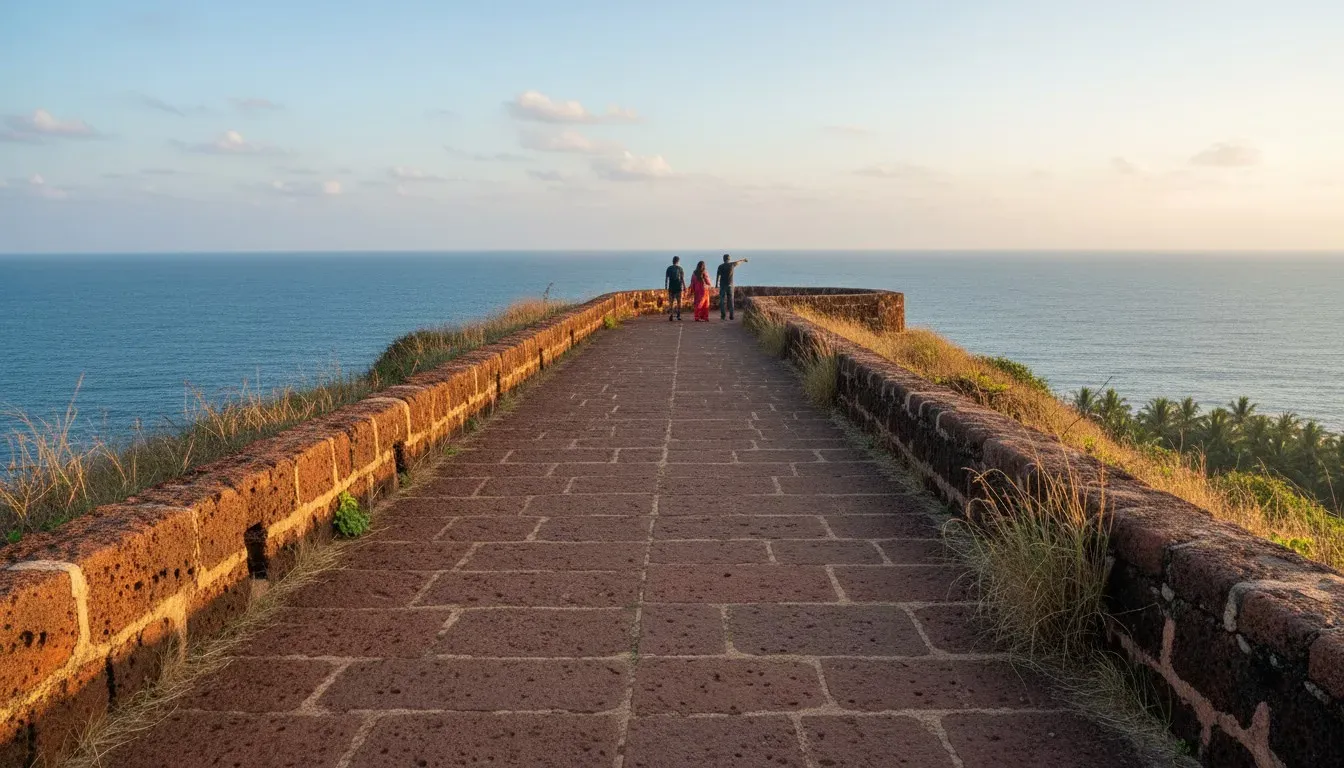


Fort Aguada stands on the rocky Sinquerim headland in North Goa, overlooking the meeting point of the Mandovi River and the Arabian Sea. Completed in 1612 by the Portuguese colonial administration, the complex once safeguarded the estuary against Dutch and Maratha fleets while serving as a crucial freshwater supply station for passing ships.
Today, the site is divided into two primary zones: the hilltop Upper Fort with its historic ramparts and lighthouses, and the sea-level Lower Fort, which formerly housed the Aguada Central Jail and now operates as the Aguad Port and Jail Complex museum. This guide covers visitor timings, entry fees, transport distances, architectural history, and practical site rules.
Timings, Entry Fees, and Parking
Upper Fort Aguada is open daily from 9:30 AM to 6:00 PM. Admission to the upper fort grounds is free, though Archaeological Survey of India (ASI) ticketing checkpoints may charge ₹25 for Indian nationals and ₹300 for foreign visitors.
The 1864 four-storey lighthouse located inside the upper courtyard is closed to internal access, but an adjacent operational modern lighthouse opens to visitors from 10:30 AM to 5:00 PM for a ₹20 entrance fee (or ₹25 for Indian citizens and ₹300 for foreign visitors).
The Aguad Port and Jail Complex museum in the lower fort operates from 10:00 AM to 5:30 PM (with grounds open up to 8:00 PM). Tickets cost ₹200 for Indian adults, ₹100 for Goa residents, Indian children, and seniors, and ₹400 for foreign visitors. Guided heritage walks run by commercial operators like Make It Happen cost between ₹800 and ₹1,050 per adult.
- Upper Fort hours: 9:30 AM to 6:00 PM daily
- Jail Museum hours: 10:00 AM to 5:30 PM daily
- Modern lighthouse visiting hours: 10:30 AM to 5:00 PM
- Designated parking fees: ₹20 to ₹50 for two-wheelers, ₹50 to ₹100 for four-wheelers
| Section / Facility | Hours | Domestic Fee | Foreign Fee |
|---|---|---|---|
| Upper Fort Grounds | 9:30 AM – 6:00 PM | Free / ₹25 | Free / ₹300 |
| Aguada Jail Museum | 10:00 AM – 5:30 PM | ₹200 (₹100 Goan residents) | ₹400 |
| Active Modern Lighthouse | 10:30 AM – 5:00 PM | ₹20 – ₹25 | ₹300 |
| Two-Wheeler Parking | During opening hours | ₹20 – ₹50 | ₹20 – ₹50 |
| Four-Wheeler Parking | During opening hours | ₹50 – ₹100 | ₹50 – ₹100 |
Location and How to Reach
Fort Aguada is located in Candolim and Sinquerim villages within the Bardez taluka of North Goa. It sits approximately 15 to 18 kilometres northwest of Panaji, requiring a drive of 35 to 45 minutes along the Betim–Verem–Candolim road. If you are exploring the northern coastline, the fort can be visited on a self-drive scooter or booked through an organized North Goa Tour.
Key coastal hubs in North Goa sit directly north of the promontory. Candolim Beach is 4 to 5 kilometres away (about 10 minutes by car), while Calangute Beach is 8 to 9 kilometres north (about 20 minutes by road). Mapusa market town lies 16 kilometres to the northeast.
| Origin Point | Distance | Approximate Drive Time |
|---|---|---|
| Candolim Beach | 4 – 5 km | 10 minutes |
| Calangute Beach | 8 – 9 km | 20 minutes |
| Panaji | 15 – 18 km | 35 – 45 minutes |
| Mapusa | 16 km | 35 – 40 minutes |
| Thivim Railway Station | 26 km | 45 – 50 minutes |
| Manohar International Airport (Mopa - GOX) | 38 – 48 km | 1 hour 15 min – 1 hour 25 min |
| Dabolim Airport (GOI) | 42 – 44 km | 1 hour – 1 hour 15 minutes |
| Margao Railway Station | 50 km | 1 hour 30 minutes |
History and Fort Architecture
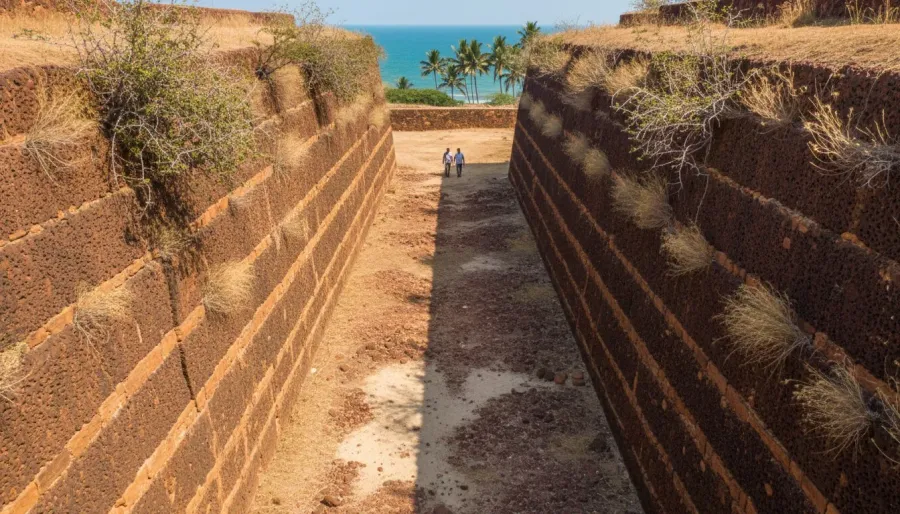
Completed in 1612, Fort Aguada was constructed out of local red laterite stone to counter threats from Dutch naval squadrons and Maratha forces. The fort rampart walls stand 5 metres tall and measure 1.3 metres thick. A dry perimeter moat shielded the perimeter, while bastions were engineered to mount up to 79 artillery cannons.
The name Aguada originates from the Portuguese word for "watering place." In the upper fort, engineers excavated a massive underground vaulted laterite cistern capable of holding up to 2,376,000 imperial gallons of potable water. Ocean-going ships routinely anchored in the sheltered bay below to restock water barrels before continuing maritime voyages.
In 1864, a 13-metre-tall, four-storey circular masonry lighthouse was constructed within the upper courtyard, initially operating with oil lamps. It was decommissioned in 1976 when a modern lighthouse was built adjacent to the fort. Both the subterranean reservoir and the 1864 lighthouse tower remain closed to internal entry.
Aguada Jail Museum (Lower Fort)
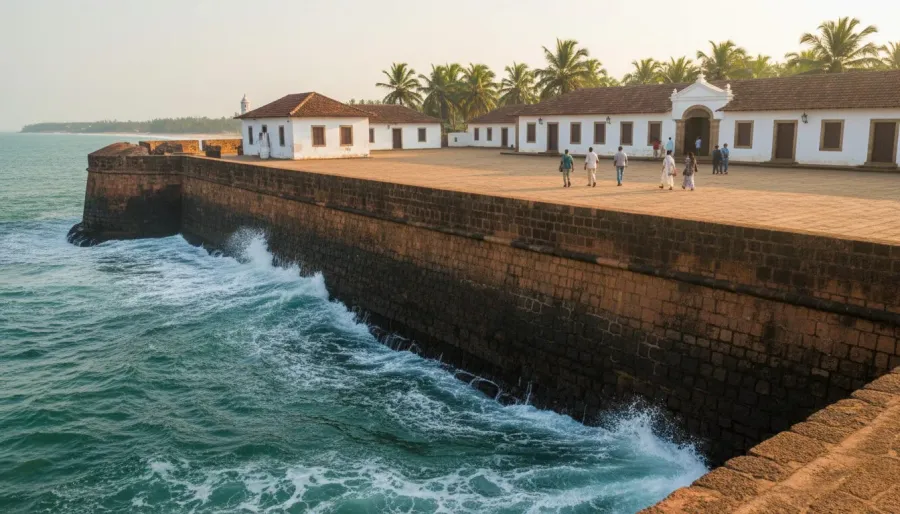
The lower section of the fortification runs right to the water's edge at Sinquerim. During the Portuguese regime of António de Oliveira Salazar, this area was converted into the Aguada Central Jail, where Goan freedom fighters and political dissidents were incarcerated. The prison remained operational well after Goa's liberation, closing finally in 2015.
The Goa Tourism Development Corporation (GTDC) restored the decommissioned prison, reopening it in 2022 as the Aguad Port and Jail Complex museum. Visitors can view historic prison barracks, jail cells, and curated exhibition galleries that document Goa's struggle for freedom.
Best Time to Visit and Daily Planning
The primary travel season for Fort Aguada is from October to March, particularly November through February, when dry winter conditions bring pleasant temperatures between 20°C and 32°C. During the southwest monsoon from June to September, the fort remains open, but visitors must contend with heavy rains, slippery stones, and restricted access along coastal footpaths.
The fort plateau provides almost no shaded tree cover or overhead canopies. To avoid midday sun and heat, time your arrival between 9:30 AM and 11:00 AM, or plan an afternoon visit between 4:30 PM and 6:00 PM for sunset views over the Arabian Sea.
Travelers building an itinerary can review the North Goa One Day Itinerary or pair the fort with nearby heritage stops in our Goa Sightseeing Guide.
Visitor Rules, Safety, and Site Tips
Fort Aguada is a protected monument under the Archaeological Survey of India (ASI). Visitors must adhere strictly to site regulations to protect the structure and ensure personal safety.
Several elevated bastions and cliff edges lack guardrails. Sitting on, leaning over, or climbing the outer laterite perimeter walls for photography is strictly forbidden. Parents visiting with young children must maintain close supervision near all low ramparts.
The walking routes consist of uneven cobblestones, weathered rock surfaces, and exposed stone stairs. The terrain is not accessible for wheelchairs or standard baby strollers. Wear closed walking shoes or flat sandals with good tread.
Flying civilian drones or unmanned aerial vehicles anywhere over the monument without written clearance from the ASI and the Directorate General of Civil Aviation (DGCA) is strictly prohibited. The possession or consumption of alcohol, tobacco products, and narcotics is forbidden. Littering and writing graffiti on the laterite walls are punishable legal offences.
There are no dining facilities or ATMs inside the monument walls. Public restrooms and small kiosks selling bottled water and packaged snacks are available outside the main gate.
Nearby Attractions to Combine with Fort Aguada
Several major coastal and heritage sights sit within minutes of the fort headland:
Sinquerim Beach sits directly at the foot of the hill, 1 kilometre downhill from the upper gate. Between October and May, local operators run boat trips and dolphin-watching excursions from the Sinquerim jetty. For details on water outings, consult our guide to Dolphin Spotting Trips in Goa.
St. Lawrence Church, built by the Portuguese in 1630 to serve as a garrison chapel, stands on the same Candolim ridge just 1.4 kilometres east of the fort.
Reis Magos Fort is situated 9 kilometres east along the Verem-Nerul road. Like Aguada, it is a restored coastal defense post overlooking the Mandovi estuary and makes an easy addition to the same afternoon drive.
Book with GoaWala
8 options from ₹400 per person — live prices, October 2026.
- Calma Sundowner Cruise — from ₹400 per person · 1 Hour 30 Minutes · Panaji (Central Goa)
- Capital Sundowner Cruise — from ₹400 per person · 1 Hour 30 Minutes · Panaji (Central Goa)
- North Goa Tour — from ₹400 per person · 9 Hours · North Goa
- Paradise Sunset Cruise — from ₹400 per person · 1 Hour 30 Minutes · Panaji (Central Goa)
- South Goa Tour — from ₹400 per person · 9 Hours · South Goa
- Vihaan Sunset Cruise — from ₹400 per person · 1 Hour 30 Minutes · Panaji (Central Goa)
- Princesa Sunset Cruise — from ₹450 per person · 2 Hours · Panaji (Central Goa)
- Extreme South Goa Tour — from ₹1,500 per person · 10 Hours · South Goa
Frequently asked questions
What are the opening hours for Fort Aguada?
Upper Fort Aguada is open daily from 9:30 AM to 6:00 PM. The Aguada Jail Museum in the lower fort is open daily from 10:00 AM to 5:30 PM.
Is entry to Fort Aguada free?
General entry to the Upper Fort grounds is free, though ASI ticket counters may charge ₹25 for Indian nationals and ₹300 for foreign visitors. The Aguada Jail Museum charges an admission fee of ₹200 for domestic adult visitors, ₹100 for Goa residents, and ₹400 for foreign visitors.
Can I fly a drone at Fort Aguada?
No. Operating civilian drones over the fort premises without prior written clearance from the Archaeological Survey of India and the DGCA is strictly prohibited.
Can visitors enter the old Portuguese lighthouse and the water cistern?
No. The historic 1864 four-storey lighthouse and the underground freshwater cistern are closed to internal public access. However, the adjacent modern lighthouse is open to visitors from 10:30 AM to 5:00 PM for an entry fee.
Is Fort Aguada wheelchair accessible?
No. The fort pathways are made of uneven cobblestones, weathered laterite stone, and open staircases, making the site inaccessible to wheelchairs and strollers.
What is the best time of day to visit Fort Aguada?
The best hours to visit are between 9:30 AM and 11:00 AM to avoid peak sun exposure, or between 4:30 PM and 6:00 PM to view the sunset over the Arabian Sea.
Sources
- goaholidayguide.com
- oneboard.app
- explorebees.com
- travanya.com
- oneboard.app
- cocosnest.com
- tripnetra.com
- goa-tourism.org.in
- facebook.com
- facebook.com
- universaladventures.in
- prudentmedia.in
- asi.nic.in
- aerialmedia.com
- explorebees.com
- offbeatpeak.com
- trawell.in
- livehistoryindia.com
- thegoavilla.com
- getyourguide.com
Last checked 9 October 2026
More in Places to Visit in Goa: Essential Sights and Visitor Guide
- Basilica of Bom Jesus, Old Goa: Visitor Guide
- Chapora Fort Goa: Visitor Guide, Timings, and History
- Dudhsagar Falls: Safari Bookings, Costs, Timings, and Rules
- How to Visit Dudhsagar Falls: Complete Safari & Route Guide
- Grande Island Goa: Diving, Boat Tours, and Trip Guide
- Spice Plantations in Goa: Visitors Guide, Farms & Costs