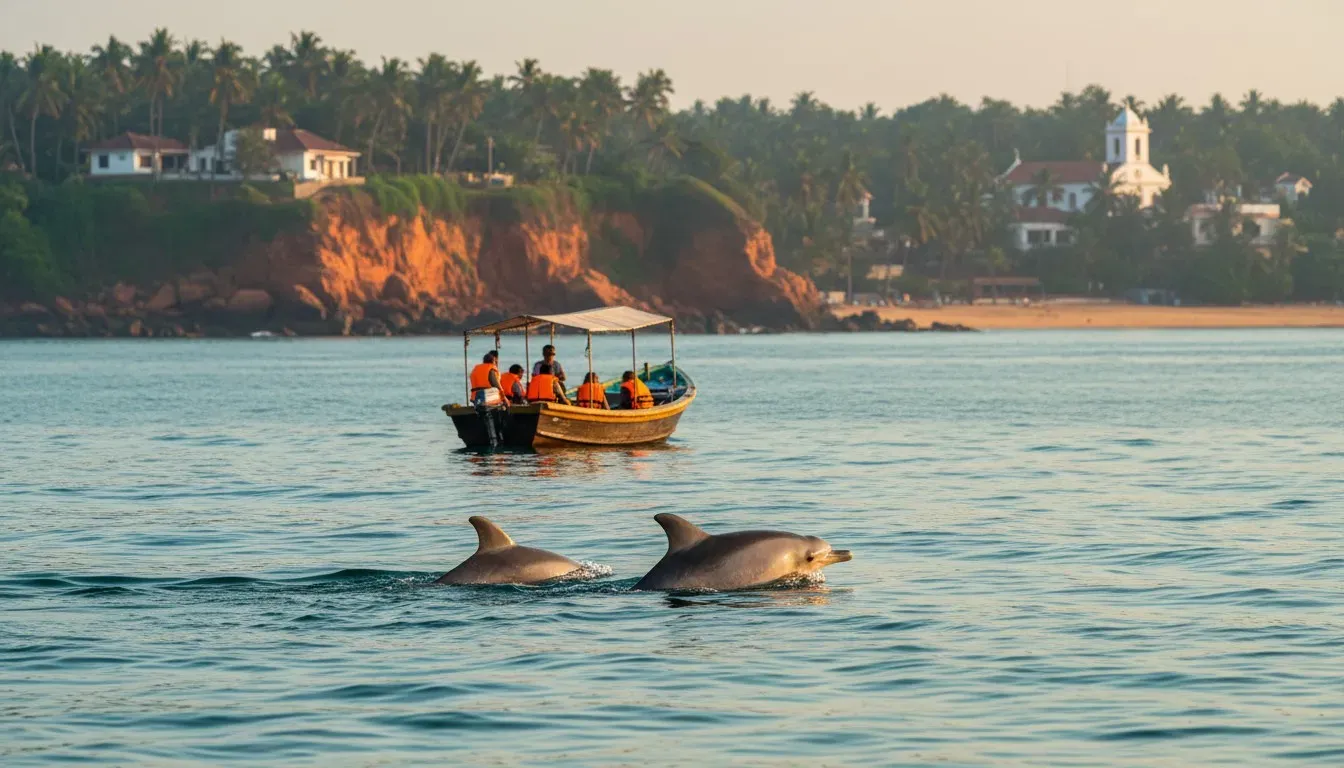


The most commonly observed marine mammal is the Indian Ocean humpback dolphin, a coastal resident species that frequents shallow waters within 1 to 2 kilometres of the shore. Trips operate between 8:00 AM and 5:00 PM, with early morning departures offering the highest probability of sightings.
This guide outlines departure hubs, current ticket rates, sighting seasons, coastal sights included on each route, and mandatory safety regulations for travellers planning water excursions on Goa beaches.
Best Time and Operating Season for Dolphin Trips
Commercial dolphin-watching excursions in Goa operate during the dry tourist season from October through May, when sea conditions remain calm and waters are clear. All open-sea dolphin joyrides and motorized water sports in Goa are suspended from June 1 through late September or early October under the annual monsoon maritime ban enforced by the Captain of Ports.
While boats operate throughout the day until 5:00 PM, the highest probability of dolphin sightings occurs in the early morning between 6:30 AM and 10:00 AM. During these early hours, sea surface chop is minimal, motorized boat traffic is lower, and humpback dolphins are actively feeding nearshore in coastal shallows and river mouths.
- Operating season: October to May (closed June to late September/early October during the monsoon ban).
- Best sighting window: 6:30 AM to 10:00 AM for calm water and active estuarine feeding.
- General departure hours: Daily trips run between 8:00 AM and 5:00 PM.
Dolphin Trip Ticket Prices and Departure Hubs
Dolphin boat trips launch from designated jetties and beaches across North and South Goa. Most operators use open 10- to 12-seater or 10- to 20-seater outboard-motor fibreglass vessels. Shared tickets can be bought directly at association counters or beach launch spots, while private charters can be negotiated per vessel for families or small groups.
Most local boat associations permit children under 3 or 4 years of age to board free of charge. In northern Bardez and Pernem, specialized four-hour marine ecotours ("Ocean Biodiversity Experience") operating from the Chapora River basin charge approximately ₹2,500 per adult for non-intrusive wildlife observation.
| Hub Location | Region & Taluka | Shared Ticket Price (2024) | Private Charter Rate (2024) |
|---|---|---|---|
| Sinquerim Beach & Jetty | North Goa (Bardez) | ₹300 – ₹500 per person | ₹1,500 – ₹3,000 per vessel |
| Coco Beach (Nerul) | North Goa (Bardez) | ₹350 – ₹500 per person | ₹1,500 – ₹3,000 per vessel |
| Morjim Beach / Chapora Estuary | North Goa (Pernem) | Standard rates / ₹2,500 ecotour | Varies by vessel size |
| Palolem Beach | South Goa (Canacona) | ₹500 – ₹800 per person | ₹2,000 – ₹3,000 per vessel |
| Cavelossim & Mobor Beaches | South Goa (Salcete) | ₹300 – ₹600 per person | ₹1,500 – ₹3,000 per vessel |
North Goa Launch Points: Sinquerim, Coco Beach, and Morjim
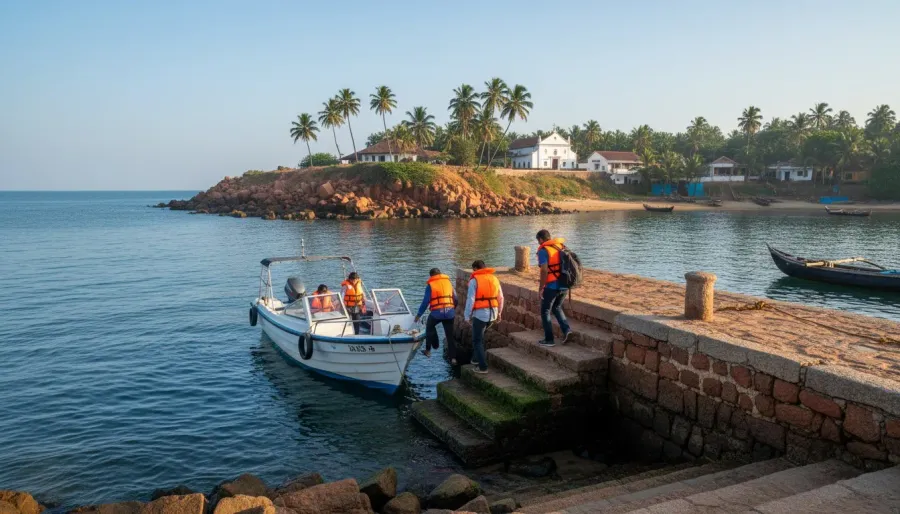
Sinquerim Beach and Sinquerim Jetty in Candolim village (14 to 15 km northwest of Panaji) serve as the primary dolphin tour hub in North Goa. The Sinquerim-Candolim Watersports Association manages boat queues here, with nearly 200 registered dolphin boats documented at the jetty. Standard trips navigate 1 to 2 nautical miles off the coast and pass historic headland landmarks, including the 17th-century Fort Aguada, the 1864 Aguada lighthouse, the Old Central Jail Aguada (now a museum), and the clifftop residence known as Jimmy Gazdar's Palace.
Coco Beach in Nerul village (10 km northwest of Panaji) sits at the confluence of the Nerul River, the Mandovi River, and the Arabian Sea. Boats launching from Coco Beach cover similar waters near the base of Fort Aguada.
Further north, morning boat trips operate out of Morjim Beach and the Chapora River estuary in Pernem taluka (28 km north of Panaji). For those exploring broader maritime options from Central Goa, larger passenger vessels operate dolphin cruises from Miramar Beach in Tiswadi near the mouth of the Mandovi River, and day boat trips out of Dona Paula or Mormugao Harbour incorporate dolphin watching on the route to Grand Island (Ilha Grande).
South Goa Launch Points: Palolem, Cavelossim, and Mobor
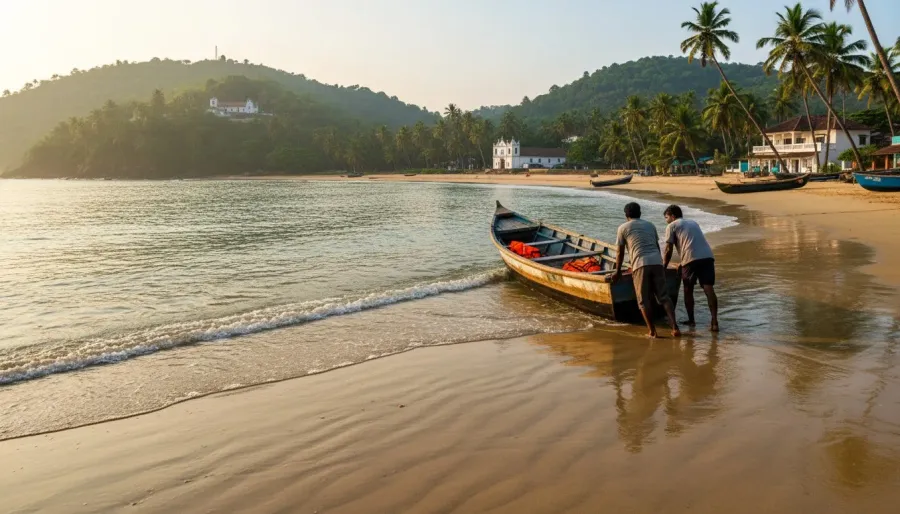
Palolem Beach in Canacona taluka (38 km south of Margao and 67 km south of Panaji) is the main South Goa center for dolphin excursions. Excursions departing Palolem Beach routinely combine dolphin searches with coastal circuits around Canacona headlands, stopping at Butterfly Beach, Honeymoon Beach, and Monkey Island. Both Butterfly Beach and Honeymoon Beach are isolated coves accessible only via boat or forest hiking trails.
In Salcete taluka, dolphin tours depart from Cavelossim Beach and Mobor Beach (15 km south of Margao). These boats venture into the open sea where the Sal River estuary empties into the Arabian Sea, searching for feeding pods along the estuarine plume.
Agonda Beach in Canacona taluka also serves as an alternative launch point for South Goa dolphin-spotting boats, keeping to calmer nearshore waters within Canacona.
Dolphin Species Found in Goa Waters
The primary marine mammal species observed off Goa's shoreline is the Indian Ocean humpback dolphin (*Sousa plumbea*), along with records of the Indo-Pacific humpback dolphin (*Sousa chinensis*). These resident cetaceans feed primarily in waters under 20 metres deep and stay within 1 to 2 kilometres of the shore.
In addition to humpback dolphins, the Indo-Pacific finless porpoise (*Neophocaena phocaenoides*) is occasionally recorded in shallow Goan coastal waters and river estuaries.
Humpback dolphins are classified as a Schedule I protected species under India's Wildlife (Protection) Act, 1972. This designation grants them the highest category of legal protection under Indian law, making it a serious offense to harass, chase, capture, or harm them.
Wildlife Guidelines and Boat Regulations
Commercial dolphin-watching vessels must hold a valid registration certificate and safety license issued by the Captain of Ports Department and an operating permit from the Goa Department of Tourism. Captain of Ports regulations restrict small motorized tourist boats conducting coastal tours to an operational zone within one nautical mile (approximately 1.85 km) of the coastline.
Under state safety regulations, every passenger and crew member is legally required to put on an approved life jacket before the vessel leaves the shore. To protect cetacean populations, responsible wildlife watching protocols developed with marine conservation bodies and the Goa Forest Department enforce strict operating standards on the water.
- Distance buffer: Boats must maintain a minimum distance of 50 to 100 metres from dolphins.
- Approach angle: Skippers must approach parallel to the pod's travel direction and never cross through or encircle pods.
- Engine handling: Operators must idle engines near pods and cut propulsion if dolphins approach the boat.
- Strict bans: Touching, feeding, chasing, and swimming with dolphins are strictly prohibited during tours.
What to Expect and Practical Boarding Tips
Most standard dolphin excursions use open fibreglass boats without shade roofs, onboard restrooms, or drinking water facilities. Understanding the boarding conditions beforehand helps avoid common logistical problems during your things to do in Goa itinerary.
Because most boats launch directly from the sand, passengers must wade through ankle- to knee-deep surf to climb the boat ladder. Wear footwear that slips off easily or water-resistant sandals, and carry personal sun protection including sunglasses and hats.
- Waterproof protection: Store mobile phones, cameras, wallets, and car keys in sealed dry bags to guard against salt spray and wet beach boardings.
- Motion sickness: Open swells pick up quickly outside river mouths. Travellers prone to seasickness should take motion sickness medication 30 to 60 minutes before departure.
- Child life jackets: Operators stock mostly adult-sized life jackets; check and confirm the fit of youth or child-sized vests before purchasing tickets.
- Hydration: Carry your own drinking water, as open tourist boats do not provide refreshments on 45- to 60-minute routes.
Book with GoaWala
6 options from ₹350 per person — live prices, October 2026.
- Thunder World Goa — from ₹350 per person · 2 Hours · North Goa
- Kayaking in Goa — from ₹400 per person · 30 Minutes · North Goa
- North Goa Tour — from ₹400 per person · 9 Hours · North Goa
- Snow Park Goa — from ₹400 per person · 2 Hours · North Goa
- South Goa Tour — from ₹400 per person · 9 Hours · South Goa
- Extreme South Goa Tour — from ₹1,500 per person · 10 Hours · South Goa
Frequently asked questions
How much does a dolphin trip cost in Goa?
Shared boat tickets generally cost between ₹300 and ₹500 per person in North Goa (Sinquerim and Coco Beach) and ₹500 to ₹800 per person at Palolem in South Goa. Private boat charters for 6 to 8 passengers range from ₹1,500 to ₹3,000 per vessel.
What is the best time of day to see dolphins in Goa?
The highest sighting probability occurs between 6:30 AM and 10:00 AM. Sea conditions are calmer during early mornings and estuarine feeding activity is at its peak before heavy motorized boat traffic begins.
Are dolphin trips open during the monsoon in Goa?
No. Commercial dolphin trips and motorized water sports are suspended from June 1 through late September or early October due to rough seas and the mandatory maritime safety ban enforced by the Captain of Ports.
Which species of dolphins are seen in Goa?
The most common species is the Indian Ocean humpback dolphin (*Sousa plumbea*), a Schedule I protected cetacean that lives within 1 to 2 kilometres of the coast. Indo-Pacific finless porpoises are also occasionally recorded in shallow bays.
Where do dolphin boats depart from in North Goa?
The main departure points in North Goa are Sinquerim Beach and Jetty at the base of Fort Aguada, Coco Beach in Nerul along the Mandovi estuary, and Morjim Beach near the Chapora River mouth.
Are life jackets provided and mandatory on dolphin trips?
Yes. Under regulations enforced by the Captain of Ports and Goa Tourism, every passenger and crew member is legally required to wear an approved life jacket before the boat leaves the beach or jetty.
Can you swim with or touch dolphins during the tour?
No. Humpback dolphins are protected under Schedule I of India's Wildlife (Protection) Act, 1972. Swimming with, feeding, touching, or chasing dolphins is illegal under Goan maritime and wildlife regulations.
Sources
- seawatersports.com
- wanderlog.com
- trodly.com
- traveladventuresgoa.com
- goatripplanner.com
- rove.me
- rajputanacabs.in
- treksandtrails.org
- goatourspackage.com
- klook.com
- navhindtimes.in
- klook.com
- goa.gov.in
- lbb.in
- goaboatcruise.com
- sanctuarynaturefoundation.org
- thegoavilla.com
- downtoearth.org.in
- mongabay.com
- coralbnb.com
Last checked 5 October 2026