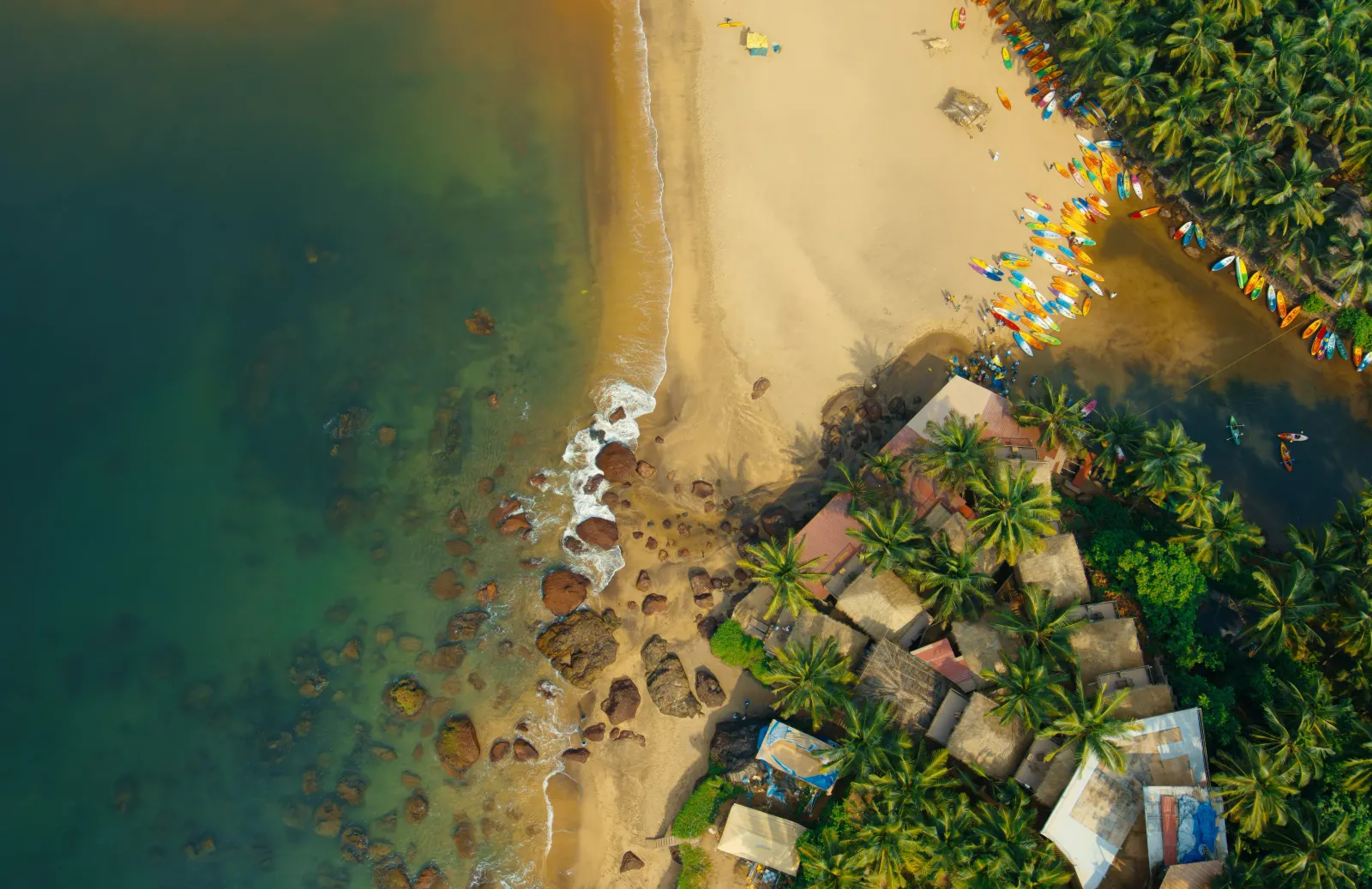


Goa's islands fall into two distinct geographic categories: offshore islands in the Arabian Sea accessible only by marine tour boats, and estuarine river islands along the Mandovi and Zuari rivers accessible via government ferries or road causeways. While open-sea spots like Grand Island draw visitors for marine water sports, river islands like Divar, Chorão, and São Jacinto offer historic villages, mangrove bird habitats, and colonial architectural sites.
Taking an island tour in Goa requires navigating specific logistics. Offshore boat trips operate under seasonal maritime restrictions and naval boundaries, while river island trips rely on River Navigation Department (RND) ferry timetables. This guide covers how to reach each island, ticket prices, boat packages, visiting hours, and essential local rules.
Goa Island Hopping Overview and Logistics
Unlike contiguous beach stretches, Goa's islands are spread across Bardez, Tiswadi, Mormugao, and Canacona talukas. Selecting which island to visit depends on whether you seek scuba diving and open-water snorkeling or quiet heritage walks and bird watching.
Commercial marine day trips operate out of coastal jetties, whereas estuarine river islands are served by state-run flat-bottom Ro-Ro ferries that transport pedestrians, two-wheelers, and four-wheelers across the river channels.
| Island | Location | Transit Method | Typical Cost | Operational Season |
|---|---|---|---|---|
| Grand Island | Arabian Sea (Mormugao) | Boat from Sinquerim, Coco Beach, Baina | ₹1,500 – ₹4,500 per person | October to May (closed June–Sept) |
| Divar Island | Mandovi River (Tiswadi) | RND Ferry (Old Goa, Ribandar, Narve) | Free (walk/bike); ₹10–₹40 (cars) | Year-round (6:00 AM – 2:00 AM) |
| Chorão Island | Mandovi River (Tiswadi) | RND Ferry from Ribandar Wharf | Free ferry; ₹100 sanctuary entry | Year-round (Oct–March for migratory birds) |
| São Jacinto Island | Zuari River (Mormugao) | Silver Gate Bridge causeway (Walk-in) | Free entry | Year-round (24 hours) |
| Vanxim Island | Mandovi River (Tiswadi) | RND Ferry from Amboi Jetty (Divar) | Free entry | Year-round |
| Conco Island | Palolem Bay (Canacona) | Local boat or low-tide sandbar walk | Boat fare or free on foot | October to May |
Grand Island (Ilha Grande): Scuba Diving and Boat Trips
Grand Island is situated in the Arabian Sea off the coast of Mormugao Harbour, roughly 10 to 12 kilometres west of Vasco da Gama and Bogmalo. Day excursions depart primarily between 7:30 AM and 4:30 PM from Sinquerim Jetty in Candolim (a 35-minute drive from Panaji), Coco Beach Jetty in Nerul, Dona Paula, and Baina Beach in Mormugao. The boat crossing takes 45 to 60 minutes each way.
Shared day-tour packages to Grand Island cost between ₹1,500 and ₹2,500 per person for dolphin spotting, snorkeling, and lunch. Packages that include an introductory scuba dive cost between ₹2,500 and ₹4,500 per person. Introductory scuba dives take place at depths of 5 to 12 metres under the direct supervision of certified PADI or SSI dive masters at a 1:1 instructor-to-diver ratio. The minimum age requirement for diving is 10 years.
Key dive and snorkel sites surrounding Grand Island and the neighboring São Jorge Island include Grande Banks (depths of 4 to 8 metres) and Suzy's Wreck. Located off the southwest coast of Grand Island at a depth of 10 to 13 metres, Suzy's Wreck is an artificial reef formed by the SS Rita, a British cargo vessel that sank in the 1950s. If you plan an offshore excursion, review our guides to Grande Island and scuba diving in Goa.
Due to maritime safety regulations enforced by the Goa Captain of Ports, all commercial boat trips to Grand Island cease operations from June through September during the southwest monsoon. All passengers are legally required to wear certified life jackets during boat transit and open-water swimming.
- Civilian landings on Grand Island's interior are prohibited because the area is under Indian Navy jurisdiction; boats anchor in coves and use approved coastal strips like Monkey Beach.
- Private charter options along coastal waters can be explored through a private yacht charter in Goa.
- Dolphin watching sightings occur during the open-sea crossing; see our dolphin spotting guide for details on route sightings.
Divar Island: Mandovi River Heritage and Ferries
Divar Island sits in the Mandovi River in Tiswadi taluka, approximately 10 kilometres east of Panaji. The island has no direct road bridges connecting it to the mainland, preserving a rural village setting surrounded by tidal waterways. It is accessed entirely through River Navigation Department (RND) ferry routes:
1. Old Goa ferry wharf (near Viceroy's Arch) crossing to Piedade. 2. Ribandar ferry wharf (St. Pedro route). 3. Narve wharf in Bicholim taluka crossing to Naroa.
Ferries between Old Goa and Divar operate daily from 6:00 AM to 2:00 AM, departing every 15 to 30 minutes. The crossing is free for pedestrians, bicycles, and two-wheelers. Four-wheel motor vehicles pay an official toll between ₹10 and ₹40 per trip depending on vehicle size.
Historic landmarks on Divar Island include the hilltop Church of Our Lady of Compassion in Piedade village, constructed between 1700 and 1724 over the remains of an ancient Kadamba dynasty temple complex. In Malar village, the Church of São Matias dates back to 1591–1597, built under Portuguese Governor Dom Mathias de Albuquerque. Visitors can also see the ancient Saptakoteshwar Temple ruins in Naroa. Every year on the fourth Saturday of August, Divar Island hosts the traditional Bonderam Festival in Piedade, featuring a parade of section flags commemorating historical village boundary disputes, while Malar hosts its own Bonderam parade in mid-August.
A visit to Divar Island pairs logically with Old Goa's UNESCO World Heritage complex, located just 500 metres south of the Old Goa ferry jetty. Explore our Goa sightseeing guide for combined route itineraries.
Chorão Island and the Dr. Salim Ali Bird Sanctuary
Chorão Island is situated in the Mandovi River, roughly 8 kilometres northeast of Panaji. Visitors access the island via a 5- to 15-minute RND ferry ride from the Ribandar Ferry Wharf, located along the Panaji–Old Goa bypass road about 5 to 6 kilometres east of Panaji's Kadamba Bus Terminus.
The western tip of Chorão Island is home to the Dr. Salim Ali Bird Sanctuary, which protects 1.78 to 1.8 square kilometres (178 hectares) of estuarine mangrove forest. Managed by the Goa Forest Department, the sanctuary is open daily from 6:00 AM to 6:00 PM.
Official admission tickets cost ₹100 for Indian nationals and ₹300 for foreign visitors. Camera permits cost ₹25 for still cameras and ₹150 for video cameras. Inside the reserve, local boatmen operate guided motorized boat safaris through the mangrove channels under Forest Department regulation. These trips take 60 to 90 minutes and cost approximately ₹750 to ₹900 per boat (carrying up to 10 passengers), or roughly ₹75 to ₹100 per individual seat.
The optimal window to visit Chorão Island is from October through March, when migratory birds such as pintails, coots, and purple herons shelter in the wetlands and morning low tides expose the estuarine mudflats. For wider seasonal travel considerations, refer to our best time to visit Goa guide.
São Jacinto Island: Causeway Access and Conservation
São Jacinto (St. Jacinto) Island is located in the Zuari River estuary in Chicalim village, Mormugao taluka. It sits 3.5 to 5 kilometres (an 8-to-10-minute drive) northeast of Dabolim Airport (GOI) along National Highway 566, and 7 kilometres northeast of Vasco da Gama.
Unlike Divar or Chorão, São Jacinto Island does not require a ferry crossing. It connects directly to the mainland coastal road via the vehicular Silver Gate Bridge causeway. However, outside motor vehicles are barred from the island's narrow residential lanes, meaning visitors must park before the causeway or at the entrance and explore the settlement on foot.
The island is open 24 hours a day with free admission. Architectural points of interest include the St. Hyacinth Church, which was elevated from a chapel to a parish church in 1835, and a disused 19th-century stone lighthouse belonging to the Mormugao Port Authority.
São Jacinto has remained free from commercial resort infrastructure due to a historic pact. In 1927, the local villagers enacted a communal resolution prohibiting the sale or long-term lease of island land to commercial developers, maintaining its traditional residential footprint.
Vanxim, Conco, and Restricted Offshore Islands
Goa has several smaller islets with distinct access rules:
**Vanxim Island (Ilha de Capão)** Located in the Mandovi River roughly 10 kilometres northeast of Panaji, Vanxim Island has no direct mainland road connection. To reach Vanxim, travellers must first cross to Divar Island, drive to the Amboi ferry jetty, and take a 5-minute RND passenger ferry to the islet. The island has free entry and contains the Church of Santo Cristo, the Chapel of the Miraculous Cross, and a Sateri temple, with village church feasts held annually in April and May.
**Conco Island (Monkey Island)** Conco Island is an uninhabited 5-acre island located in the bay of Palolem Beach in Canacona taluka, 62 kilometres south of Dabolim Airport. Outside of the monsoon season, visitors can reach Conco Island via a 20-minute local boat ride from Palolem Beach (operating daily from 9:00 AM to 7:00 PM) or by wading across the shallow sandbar during low tide.
**Anjediva Island (Restricted)** Administered as part of South Goa, Anjediva Island is located offshore near the southern state border. The island is integrated into the Indian Navy's INS Kadamba naval base; civilian tourist visits are strictly prohibited.
Book with GoaWala
20 options from ₹9,500 per yacht — live prices, October 2026.
- Calma Sundowner Cruise — from ₹400 per person · 1 Hour 30 Minutes · Panaji (Central Goa)
- Capital Sundowner Cruise — from ₹400 per person · 1 Hour 30 Minutes · Panaji (Central Goa)
- North Goa Tour — from ₹400 per person · 9 Hours · North Goa
- Paradise Sunset Cruise — from ₹400 per person · 1 Hour 30 Minutes · Panaji (Central Goa)
- South Goa Tour — from ₹400 per person · 9 Hours · South Goa
- Vihaan Sunset Cruise — from ₹400 per person · 1 Hour 30 Minutes · Panaji (Central Goa)
- Princesa Sunset Cruise — from ₹450 per person · 2 Hours · Panaji (Central Goa)
- Extreme South Goa Tour — from ₹1,500 per person · 10 Hours · South Goa
Frequently asked questions
How much does a Grand Island boat tour cost?
Standard shared boat trips for dolphin spotting and snorkeling cost between ₹1,500 and ₹2,500 per person. Day packages that include an introductory scuba dive cost between ₹2,500 and ₹4,500 per person.
Can I visit Grand Island during the monsoon season?
No. Commercial boat tours and diving trips to Grand Island are suspended from June through September due to rough sea conditions and state maritime safety regulations enforced by the Goa Captain of Ports.
How do I reach Divar Island?
Divar Island has no bridge connection and must be reached by River Navigation Department ferries departing from Old Goa, Ribandar, or Narve. Ferries run daily from 6:00 AM to 2:00 AM and are free for pedestrians and two-wheelers, while four-wheelers pay ₹10 to ₹40.
What are the timings and fees for the Dr. Salim Ali Bird Sanctuary on Chorão Island?
The sanctuary is open daily from 6:00 AM to 6:00 PM. Entry tickets cost ₹100 for Indian nationals and ₹300 for foreigners, with camera fees of ₹25 for still cameras and ₹150 for video cameras. Guided boat safaris cost ₹750 to ₹900 per boat for up to 10 passengers.
Can vehicles drive onto São Jacinto Island?
While the Silver Gate Bridge connects São Jacinto Island to the mainland, outside motor vehicles are barred from the island's village paths, requiring all visitors to explore on foot.
Can tourists land directly on the shores of Grand Island?
No civilian landings are allowed on the interior of Grand Island because it is under Indian Navy jurisdiction. Tour boats anchor in surrounding coves and only drop guests at permitted beach strips like Monkey Beach.
Sources
- guavatrips.com
- cruisesingoa.com
- treksandtrails.org
- goasathi.com
- quora.com
- tripoto.com
- footlooseinme.com
- indiatimes.com
- coralbnb.com
- trawell.in
- indiatimes.com
- tripoto.com
- ravenouslegs.com
- universaladventures.in
- trawell.in
- holidify.com
- tripuntold.com
- goaholidayhomes.com
- gomantaktimes.com
- oneboard.app
Last checked 6 October 2026
More in Activities in Goa: What to Do and Where
- Dolphin Spotting Trips in Goa: Prices, Locations, and Timings
- Casinos in Goa: Entry Packages, Rules, and River Vessels
- Goa River Cruises Explained: Routes, Timings, and Fares
- Jet Ski in Goa: Locations, Prices, and Safety Regulations
- Paragliding in Goa: Sites, Prices, Timings, and Safety Rules
- Parasailing in Goa: Locations, Prices, and Safety Regulations
- Scuba Diving in Goa: Sites, Costs, and Diver Guidelines
- Snorkeling in Goa: Complete Guide to Sites, Costs, and Rules
- Surfing in Goa: Beaches, Surf Schools, Costs, and Season Guide
- Things to Do in Goa for Couples: Sights, Cruises, and Travel Guide