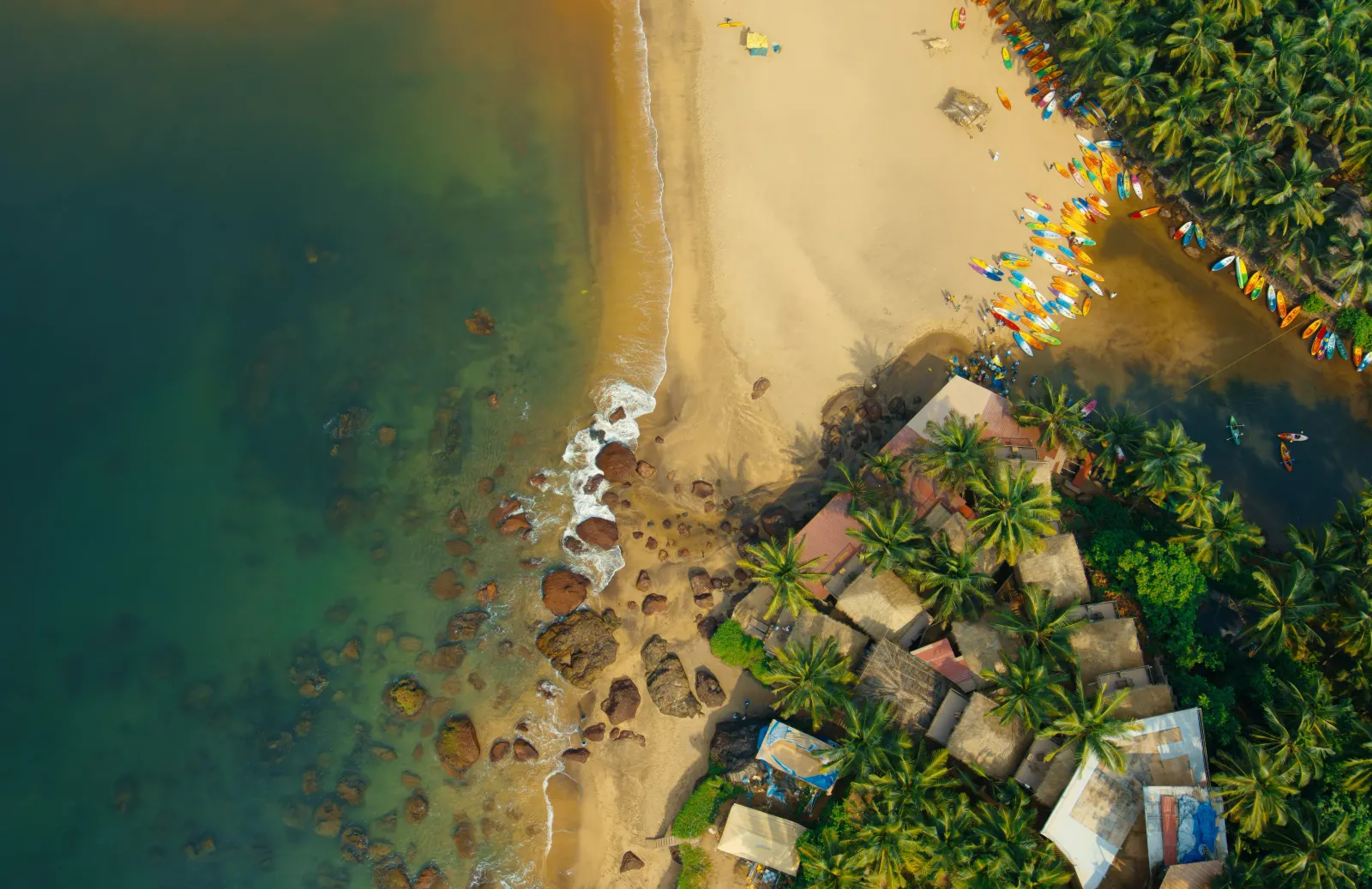


Organising your itinerary by geography reduces travel time significantly. You can explore standard circuits through organized Goa sightseeing tours, opt for a structured North Goa tour or South Goa tour, or travel independently across talukas using local ferries, rental vehicles, and state highways.
This guide breaks down the primary heritage forts, churches, wildlife reserves, temples, and cultural museums across Goa with verified admission rules, travel distances, and operational schedules.
Book with GoaWala
16 options from ₹400 per person — live prices, October 2026.
- Calma Sundowner Cruise — from ₹400 per person · 1 Hour 30 Minutes · Panaji (Central Goa)
- Capital Sundowner Cruise — from ₹400 per person · 1 Hour 30 Minutes · Panaji (Central Goa)
- North Goa Tour — from ₹400 per person · 9 Hours · North Goa
- Paradise Sunset Cruise — from ₹400 per person · 1 Hour 30 Minutes · Panaji (Central Goa)
- South Goa Tour — from ₹400 per person · 9 Hours · South Goa
- Vihaan Sunset Cruise — from ₹400 per person · 1 Hour 30 Minutes · Panaji (Central Goa)
- Princesa Sunset Cruise — from ₹450 per person · 2 Hours · Panaji (Central Goa)
- Coral Dinner Cruise — from ₹850 per person · 3 Hours · Panaji (Central Goa)
- Swastik Dinner Cruise — from ₹850 per person · 3 Hours · North Goa
- Calma Dinner Cruise — from ₹900 per person · 3 Hours · Panaji (Central Goa)
- Nirvana Dinner Cruise — from ₹900 per person · 3 Hours · Panaji (Central Goa)
- Vihaan Dinner Cruise — from ₹900 per person · 3 Hours · Panaji (Central Goa)
- Paradise Dinner Cruise — from ₹1,000 per person · 3 Hours · Panaji (Central Goa)
- Paradise Dinner Cruise — from ₹1,000 per person · 3 Hours · Panaji (Central Goa)
- Princesa Dinner Cruise — from ₹1,200 per person · 3 Hours · Panaji (Central Goa)
- Extreme South Goa Tour — from ₹1,500 per person · 10 Hours · South Goa
Coastal Forts of North and South Goa
Goa's defensive forts occupy strategic headlands overlooking river mouths and the Arabian Sea. In North Goa's Bardez taluka, Fort Aguada sits on the Sinquerim headland, 15 km west of the Panaji Kadamba Bus Stand (a 40- to 45-minute drive). Constructed in 1612 to protect the Mandovi estuary and supply ships with freshwater, the upper ramparts feature an 1864 four-storey lighthouse. Entry to the upper fort is free, with parking costing ₹20 for two-wheelers and ₹50 for cars. At the base of the fort, the Aguada Central Jail Museum operates in a former prison complex.
Further east along the Mandovi River, Reis Magos Fort stands in Verem, 8 km northwest of Panaji. Built in 1551 and restored in 2012 by INTACH and the Helen Hamlyn Trust, it functions as a cultural centre with river viewpoints. In Vagator, 22 km north of Panaji, Chapora Fort overlooks the Chapora River estuary. Reconstructed by the Portuguese in 1717 over an earlier Adil Shahi outpost, its laterite ruins require a walk up an uneven, rocky path.
In Pernem taluka, Fort Tiracol overlooks the northern border from a cliff top 42 km north of Panaji. Visitors reach it via a 15-minute public vehicle ferry across the Tiracol River from Querim beach. In South Goa's Canacona taluka, Cabo de Rama Fort occupies a coastal promontory 28 km south of Margao (roughly a 1-hour drive) and 60 km south of Panaji, providing wide views over the southern coastline.
- Fort Aguada (Candolim): Open daily 9:30 am to 6:00 pm; free entry; parking ₹20 for two-wheelers and ₹50 for cars.
- Aguada Central Jail Museum: Open Tuesday to Sunday, 9:00 am to 6:00 pm (closed Mondays).
- Reis Magos Fort (Verem): Open Tuesday to Sunday, 11:00 am to 5:30 pm (closed Mondays; last admission 5:00 pm); ₹50 adults, ₹25 students, ₹20 children; free parking.
- Chapora Fort (Vagator): Open daily 9:30 am to 5:30 pm; free entry.
- Fort Tiracol (Tiracol): Ramparts open daily 9:00 am to 7:00 pm; free entry; accessed via Querim ferry operating 6:30 am to 10:00 pm.
- Cabo de Rama Fort (Canacona): Open daily 9:00 am to 5:30 pm; free entry.
Old Goa UNESCO Heritage Sites and Basilicas
Old Goa, located in Tiswadi taluka approximately 9 to 10 km east of Panaji along the NH-748, serves as the historical ecclesiastical hub of the state. The Basilica of Bom Jesus, built between 1594 and 1605, holds the mortal remains of St. Francis Xavier. The church charges no entry fee but strictly enforces a modest dress code covering shoulders and knees.
Directly opposite stands Se Cathedral, completed in 1619 and consecrated in 1640. The cathedral houses the 17th-century Golden Bell, the largest church bell in Goa, and celebrates its annual Feast of St. Catherine on November 25. Nearby, within the Convent of Santa Monica, the Museum of Christian Art showcases sacred regional art and artefacts. Just 1 km west of Se Cathedral lie the Church of St. Augustine Ruins, an ASI-protected site featuring a surviving 46-metre-tall laterite bell tower built in 1602.
- Basilica of Bom Jesus: Monday to Saturday 9:00 am to 5:00 pm, Sunday 11:00 am to 5:00 pm; free entry; dress code enforced.
- Se Cathedral: Open daily 7:30 am to 6:00 pm; free entry; dress code enforced.
- Church of St. Augustine Ruins: Open daily 9:00 am to 5:00 pm; free admission.
- Museum of Christian Art: Open daily 10:00 am to 5:00 pm; entry ₹100 for adults, ₹50 for students.
Panaji City and Urban Heritage
Panaji features architectural landmarks that can be explored on foot. Church Square houses the Church of Our Lady of the Immaculate Conception, situated 1.5 km west of the Panaji Kadamba Bus Stand. Its distinctive zig-zag exterior staircase leads to a historic sanctuary that celebrates its annual church feast on December 8.
Immediately southeast between Ourem Creek and Altinho hill lies Fontainhas, the heritage Latin Quarter of Panaji. Its narrow streets and traditional Portuguese-era houses are open to public pedestrian access at all hours. Because Fontainhas is an active residential neighbourhood, municipal regulations restrict drone filming, commercial shoots, and posing on private verandahs or staircases without resident permission. Visitors are expected to observe quiet hours and respect residential privacy. Many travellers pair a walk in Fontainhas with evening departures along the Mandovi River, such as a dinner cruise in Goa or a sunset cruise in Goa.
- Church of Our Lady of the Immaculate Conception: Open daily 9:00 am to 12:30 pm and 3:30 pm to 7:30 pm; free admission.
- Fontainhas Latin Quarter: Accessible 24 hours on public streets; free entry; commercial filming, drones, and trespassing on residential verandahs prohibited.
Historic Temples and Mosques
Ponda and Dharbandora talukas house prominent Hindu and Islamic places of worship that represent centuries of regional history. Shri Mangueshi Temple in Priol, 21 km southeast of Panaji along the NH-748, features a prominent multi-storey deepstambha (lamp tower). The temple strictly prohibits photography inside the sanctum sanctorum and requires visitors to wear clothing covering their shoulders and legs (shorts, short skirts, and sleeveless tops are prohibited).
In Kavlem village, 30 km southeast of Panaji and 18 km northeast of Margao, Shri Shantadurga Temple sits at the foot of local hills, mandating covered shoulders and legs. Near Ponda town, Safa Masjid is an ASI-protected mosque built in 1560 by Ibrahim Adil Shah I of Bijapur, distinguished by an adjacent 30-by-30-metre laterite masonry water tank lined with arched hammam niches.
In the deep forested foothills of Dharbandora taluka, the Mahadev Temple at Tambdi Surla stands 65 km east of Panaji inside the Bhagwan Mahaveer Sanctuary. Constructed in the 12th century under the Kadamba dynasty using weather-resistant grey-black basalt in the Hemadpanthi style, it is the oldest surviving structural temple in Goa. Maintained by the Archaeological Survey of India, admission is free, and footwear must be removed before entering.
- Shri Mangueshi Temple (Priol): Open daily 6:00 am to 9:30 pm; free admission; strict dress code; photography banned in sanctum.
- Shri Shantadurga Temple (Kavlem): Open daily 6:00 am to 8:30 pm; free admission; shoulders and legs must be covered.
- Safa Masjid (Ponda): Open daily 5:00 am to 9:00 pm; free admission.
- Mahadev Temple (Tambdi Surla): Open daily 7:00 am to 5:30 pm; free entry; footwear must be removed.
Waterfalls and Wildlife Sanctuaries
Goa's hinterlands contain diverse ecological zones spanning coastal mangroves to Western Ghats reserves. Dudhsagar Waterfalls in Sonaulim drops inside the 240-square-kilometre Bhagwan Mahaveer Wildlife Sanctuary, 60 km east of Panaji. Access to the falls is regulated through Forest Department 4x4 jeep safaris departing from Kulem (Collem) between 6:00 am and 3:30 pm during the dry season (October to May). Jeep safaris do not operate during the monsoon from June through September. Walking along active railway tracks from Kulem or Castle Rock is strictly prohibited under the Railway Act. Entering the waterfall pool requires a mandatory life jacket.
Further south, Cotigao Wildlife Sanctuary spans 86 square kilometres in Canacona taluka, 58 km southeast of Margao and 12 km southeast of Palolem Beach. It features eight marked hiking trails and a 25-metre-high tree canopy watchtower overlooking a forest watering hole. In Ponda taluka, Bondla Wildlife Sanctuary covers 8 square kilometres, offering nature trails suitable for day visits.
Close to Panaji, the Dr. Salim Ali Bird Sanctuary occupies 1.8 square kilometres of mangrove habitat on the western tip of Chorão Island along the Mandovi River. Visitors reach the island via a free 15-minute public river ferry from the Ribandar wharf (6 km east of Panaji), with best birdwatching occurring during low tide between October and March.
- Dudhsagar Waterfalls (Kulem): Safaris operate October to May; forest entry ₹100 per person, safari seats ₹560 per sharing seat (or ₹3,500 to ₹3,920 for an entire 7-seater jeep); mandatory life jacket.
- Bhagwan Mahaveer Sanctuary (Mollem): Open daily 8:00 am to 5:30 pm; entry ₹20 adults, ₹10 children.
- Cotigao Wildlife Sanctuary (Canacona): Open daily 7:00 am to 5:30 pm; entry ₹20 per adult (plus vehicle fees).
- Bondla Wildlife Sanctuary (Ponda): Open Tuesday to Sunday, 9:00 am to 5:00 pm (closed Mondays); entry ₹5 to ₹50.
- Dr. Salim Ali Bird Sanctuary (Chorão): Open daily 6:00 am to 6:00 pm; entry ₹10 to ₹50; boat tours through canals cost approx. ₹750 for up to 10 passengers.
Museums and Cultural Centres
Goa's specialised museums document regional maritime history, architecture, and agrarian traditions. In Mormugao taluka, the Naval Aviation Museum sits along Bogmalo Road, 3 km from Dabolim Airport and 6 km from Vasco da Gama. Established in 1998 by the Indian Navy, the museum features indoor galleries alongside an outdoor park displaying 13 decommissioned military aircraft and aeronautical equipment.
In South Goa, Goa Chitra Museum in Benaulim (5 km southwest of the Margao KTC Bus Stand) houses an ethnographic collection of over 4,000 traditional Goan agrarian tools and implements. In North Goa, the Houses of Goa Museum in Torda, Salvador do Mundo (8 km north of Panaji), showcases indigenous Goan domestic architecture across a unique multi-tier building located on a traffic island.
- Naval Aviation Museum (Bogmalo): Open Tuesday to Sunday, 10:00 am to 5:00 pm (closed Mondays); tickets ₹50 to ₹100 for adults, ₹50 for children.
- Goa Chitra Museum (Benaulim): Open daily 9:00 am to 6:00 pm; entry ₹100 to ₹300 per visitor.
- Houses of Goa Museum (Torda): Open Tuesday to Sunday, 10:00 am to 7:30 pm (closed Mondays); entry ₹100 for adults, ₹25 for children.
Goa Sightseeing Summary: Timings, Fees, and Locations
The table below summarizes essential visiting hours, entry fees, and locations for the major historical, cultural, and ecological attractions across Goa.
| Attraction | Location / Taluka | Timings | Entry Fee (Approx.) |
|---|---|---|---|
| Basilica of Bom Jesus | Old Goa, Tiswadi | Mon–Sat 9 am–5 pm, Sun 11 am–5 pm | Free |
| Se Cathedral | Old Goa, Tiswadi | Daily 7:30 am–6:00 pm | Free |
| Fort Aguada | Candolim, Bardez | Daily 9:30 am–6:00 pm | Free (Parking ₹20–₹50) |
| Reis Magos Fort | Verem, Bardez | Tue–Sun 11:00 am–5:30 pm (Closed Mon) | ₹50 adult, ₹25 student |
| Chapora Fort | Vagator, Bardez | Daily 9:30 am–5:30 pm | Free |
| Cabo de Rama Fort | Cabo de Rama, Canacona | Daily 9:00 am–5:30 pm | Free |
| Shri Mangueshi Temple | Priol, Ponda | Daily 6:00 am–9:30 pm | Free |
| Mahadev Temple | Tambdi Surla, Dharbandora | Daily 7:00 am–5:30 pm | Free |
| Dudhsagar Waterfalls | Sonaulim, Dharbandora | Daily 6:00 am–3:30 pm (Oct–May) | ₹100 sanctuary + ₹560 jeep seat |
| Naval Aviation Museum | Bogmalo, Mormugao | Tue–Sun 10:00 am–5:00 pm (Closed Mon) | ₹50–₹100 adult, ₹50 child |
| Cotigao Wildlife Sanctuary | Canacona | Daily 7:00 am–5:30 pm | ₹20 adult |
| Salim Ali Bird Sanctuary | Chorão Island, Tiswadi | Daily 6:00 am–6:00 pm | ₹10–₹50 (Boat tours extra) |
Important Regulations and Travel Rules in Goa
When visiting tourist places and public beaches across Goa, keep specific statutory legal regulations in mind to avoid heavy penalties.
Under the Goa Tourist Places (Protection and Maintenance) Act, consuming alcohol, cooking food outdoors, and bringing glass bottles onto public beaches and designated tourist spots is strictly illegal. Violations carry statutory fines ranging from ₹2,000 up to ₹1,00,000.
Driving private motorized vehicles—including four-wheelers and rented scooters—onto any beach in Goa is prohibited by law. Doing so leads to immediate vehicle impoundment and police registration of a First Information Report (FIR). For accommodation planning near key touring circuits, check our guide on where to stay in Goa or consider things to do in Goa to organise balanced regional itineraries.
Frequently asked questions
What are the rules regarding dress codes at churches and temples in Goa?
Places of worship like the Basilica of Bom Jesus, Se Cathedral, Shri Mangueshi Temple, and Shri Shantadurga Temple require visitors to dress modestly with covered shoulders and knees. Shorts, short skirts, and sleeveless shirts are prohibited at these locations.
Can you visit Dudhsagar Waterfalls during the monsoon season?
No. Official 4x4 jeep safaris from Kulem are closed during the monsoon months from June through September. Walking along the railway tracks to access the falls is strictly illegal under the Railway Act.
Is there an entry fee to visit Fort Aguada or Chapora Fort?
No, entry to the upper ramparts of Fort Aguada and the grounds of Chapora Fort is free. Fort Aguada charges a separate vehicle parking fee of ₹20 for two-wheelers and ₹50 for cars.
Are photography and drones permitted in Fontainhas?
Walking public streets in Fontainhas is free, but municipal rules prohibit drone filming, commercial photoshoots, and stepping onto private residential steps or verandahs without owner permission.
How do you reach Dr. Salim Ali Bird Sanctuary on Chorão Island?
The sanctuary is reached by taking the public vehicle and passenger ferry from Ribandar wharf (6 km east of Panaji) across the Mandovi River to Chorão Island. The ferry operates daily from 6:00 am and is free for foot passengers.
What is the fine for drinking alcohol on beaches in Goa?
Under the Goa Tourist Places Protection and Maintenance Act, drinking alcohol, breaking glass bottles, or cooking food on public beaches carries spot fines ranging from ₹2,000 up to ₹1,00,000.
Sources
- oneboard.app
- clubmahindra.com
- tripoto.com
- trawell.in
- makemytrip.com
- lbb.in
- museumofchristianart.com
- goadiaries.in
- trawell.in
- travelogyindia.com
- reismagosfortgoa.com
- captureatrip.com
- tripoto.com
- oneboard.app
- tripoto.com
- holidaylandmark.com
- meghablogs.com
- trawell.in
- goaview.com
- tripoto.com
Last checked 3 October 2026