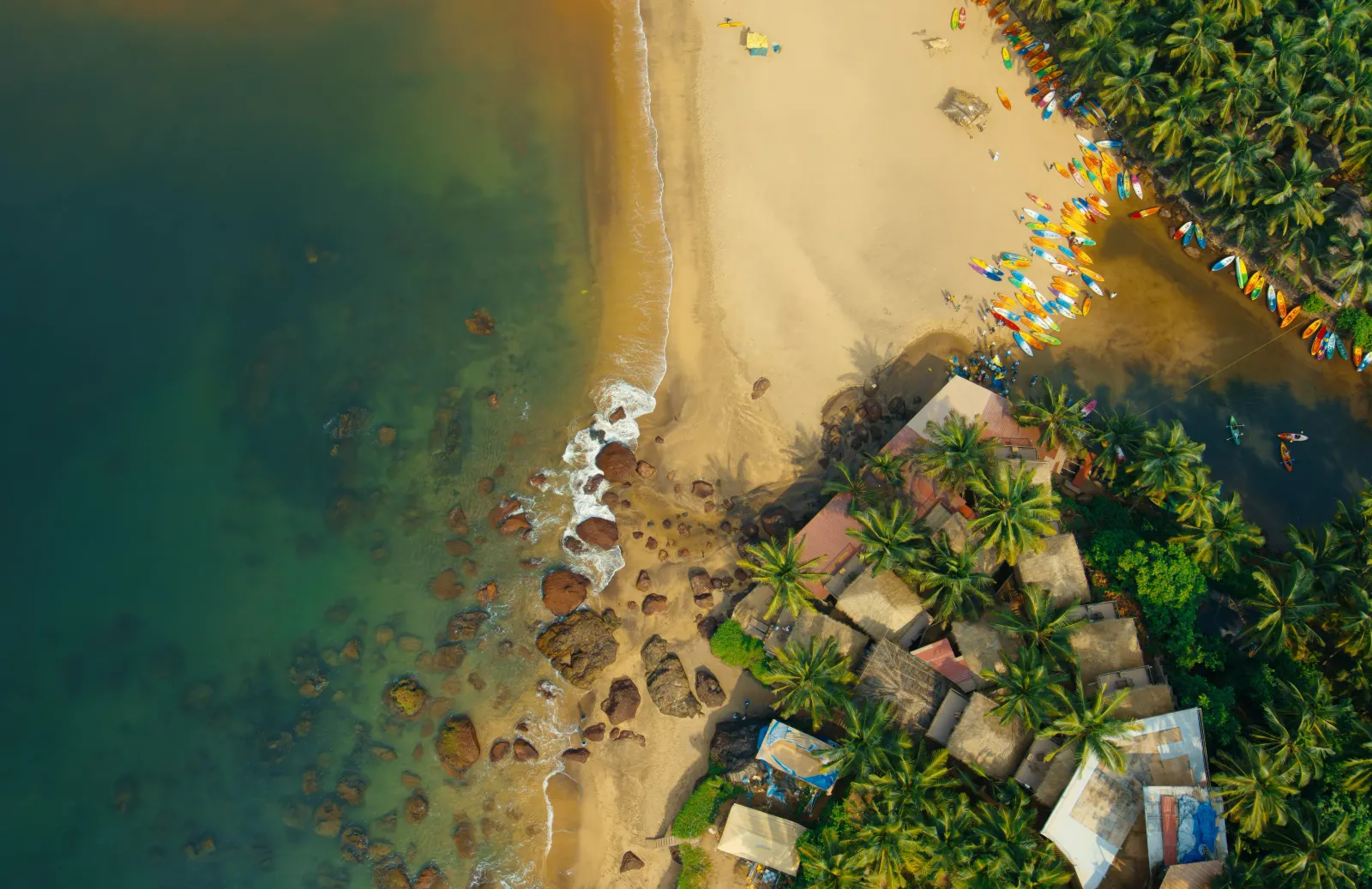


This guide outlines the accommodation areas across both districts, transit distances from Manohar International Airport (GOX) and Dabolim Airport (GOI), seasonal shack policies, and options for booking luxury private villas in Goa.
Book with GoaWala
7 options from ₹30,000 per night — live prices, October 2026.
- Arpora 3-Bedroom Private Pool Villa — from ₹30,000 per night for the whole villa · Arpora, near Baga, North Goa
- Villa Saligao — 4-Bedroom Private Pool Villa — from ₹30,000 per night for the whole villa · Saligao, near Calangute, North Goa
- Vitamin Arpora — 3-Bedroom Pool Villa — from ₹30,000 per night for the whole villa · Arpora, near Baga, North Goa
- Parra House — 5-Bedroom Boutique Villa — from ₹50,000 per night for the whole villa · Parra, North Goa
- Lux Villa — 5-Bedroom Pool Villa near Baga — from ₹60,000 per night for the whole villa · Arpora, near Baga, North Goa
- Casa Arpora — 10-Bedroom Luxury Pool Villa — from ₹67,000 per night for the whole villa · Arpora, near Baga, North Goa
- Arpora House — 8-Bedroom Villa with Pool & Jacuzzi — from ₹80,000 per night for the whole villa · Arpora, near Baga, North Goa
North Goa vs South Goa Accommodation Overview
North Goa and South Goa offer completely different stays. North Goa houses high-density commercial strips in Bardez and low-rise coastal villages in Pernem. South Goa offers quieter apartment stays in Salcete and seasonal wooden huts in Canacona.
Your transit hub also matters: Manohar International Airport (GOX) in Pernem serves the north, while Dabolim Airport (GOI) in Mormugao is central and closer to South Goa.
| Area / Hub | Taluka & District | Lodging Types | Transit Distances |
|---|---|---|---|
| Calangute & Baga | Bardez, North Goa | Hotels, resorts, guesthouses | 30 km from GOX, 18 km from Thivim railway station |
| Morjim & Mandrem | Pernem, North Goa | Low-rise cottages, guesthouses, resorts | 20 to 25 km southwest of GOX |
| Fontainhas (Panaji) | Tiswadi, North Goa | 19th-century heritage homestays, guesthouses | 35 km south of GOX, 28 km north of GOI |
| Colva & Benaulim | Salcete, South Goa | Apartments, mid-scale hotels | 22 km south of GOI, 8 km west of Madgaon Junction |
| Agonda | Canacona, South Goa | Beachfront wooden huts | Over 60 km south of GOI (Palolem/Agonda corridor) |
| Galgibaga | Canacona, South Goa | None (turtle sanctuary) | Commercial shacks and lodgings prohibited |
Calangute, Baga, and Arpora: Commercial Hubs
Calangute and Baga in Bardez taluka contain the highest density of commercial hotels, guesthouses, and resorts in North Goa. These towns sit approximately 18 km west of the Thivim railway station and 30 km south of Manohar International Airport. If you want immediate access to busy markets, beach shacks, and commercial nightlife, this area is the central base.
For families or groups who prefer private compounds close to these commercial strips, private villas in neighboring villages like Arpora, Saligao, and Parra provide dedicated pools and full-home rentals. You can stay close to the beach while avoiding commercial hotel corridors.
This area is also the standard pickup point for day excursions, including the organized North Goa tour (₹400 per person).
- Villa Saligao: 4-bedroom private pool villa in Saligao near Calangute at ₹30,000 per night for the whole villa
- Parra House: 5-bedroom boutique villa in Parra at ₹50,000 per night for the whole villa
- Lux Villa: 5-bedroom pool villa in Arpora near Baga at ₹60,000 per night for the whole villa
- Arpora House: 8-bedroom villa with pool and jacuzzi in Arpora near Baga at ₹80,000 per night for the whole villa
- Arpora 3-Bedroom Private Pool Villa: 3-bedroom villa in Arpora near Baga at ₹30,000 per night for the whole villa
- Vitamin Arpora: 3-bedroom pool villa in Arpora near Baga at ₹30,000 per night for the whole villa
Morjim, Ashwem, and Mandrem: Northern Coastal Stays
Located in Pernem taluka, Morjim, Ashwem, and Mandrem offer low-rise cottages, guesthouses, and resorts. These beaches are positioned 20 to 25 km southwest of Manohar International Airport, making them the fastest beach destinations to reach when arriving via GOX.
Morjim and Mandrem beaches are protected Olive Ridley sea turtle nesting habitats. Because of this designation, the Goa Forest Department enforces strict low-light and noise restrictions along the beach during the nesting season from November to April. Stays here are quieter at night compared to the Bardez belt.
Panaji and Fontainhas: Heritage Stays
If you prefer city culture and architectural history over a beachfront resort, Panaji is the state capital and North Goa district headquarters. Fontainhas, located in Panaji within Tiswadi taluka, is a 19th-century Portuguese Latin quarter featuring heritage homestays and guesthouses.
Panaji is centrally located: 35 km south of Manohar International Airport and 28 km north of Dabolim Airport. It also serves as the boarding hub for Mandovi River cruises, such as the Princesa Sunset Cruise (₹450 per person) and the Paradise Dinner Cruise (₹1,000 per person).
Colva, Benaulim, and Agonda: South Goa Hubs
Colva and Benaulim in Salcete taluka serve as central South Goa accommodation hubs, offering self-catering apartments and mid-scale hotels. They are situated 8 km west of Madgaon Junction railway station and 22 km south of Dabolim Airport. This location makes them practical bases for rail travelers arriving at Madgaon and visitors planning a South Goa tour (₹400 per person).
Further south in Canacona taluka, Agonda features beachfront wooden huts. Agonda operates as a designated Olive Ridley turtle nesting zone where motorized water sports and loud nighttime music are strictly prohibited by environmental and forest authorities.
Note that nearby Galgibaga Beach in Canacona taluka is an environmentally protected turtle sanctuary. The Goa Forest Department completely prohibits commercial beach shacks and permanent beachfront tourist lodgings at Galgibaga.
Seasonal Rules: Beach Shacks and Huts
When planning where to stay, be aware of coastal seasonality. Under the Goa State Shack Policy, temporary beach shacks and tourist huts along the coast must be dismantled by June 10 each year ahead of the monsoon season.
These temporary beach huts are permitted to be re-erected starting in October. If you plan to stay in beachfront wooden huts in areas like Agonda, bookings are only viable between October and early June.
Airport Connectivity and Transit
Goa is served by two commercial airports. Manohar International Airport (GOX) at Mopa in Pernem taluka opened for commercial flights in January 2023 and serves as the northern gateway, located 30 km from Calangute and 35 km from Panaji. Dabolim Airport (GOI) in Mormugao taluka is a dual civil-military airport located 23 km from Margao, 28 km from Panaji, and 60 km from Palolem.
Kadamba Transport Corporation Limited (KTCL) operates scheduled, air-conditioned electric express buses connecting both airports (GOX and GOI) to public transit terminals in Panaji, Calangute, and Margao, providing budget transit to major accommodation centers.
Frequently asked questions
Which airport is closer to Calangute and Baga?
Manohar International Airport (GOX) at Mopa is 30 km north of Calangute, whereas Dabolim Airport (GOI) is located further south across the Zuari River basin.
Can I stay in beachfront huts on Galgibaga Beach?
No. Galgibaga Beach is an environmentally protected Olive Ridley turtle sanctuary where the Goa Forest Department strictly prohibits all commercial beach shacks and permanent beachfront lodgings.
Are beach huts available in Goa during the monsoon?
No. Under the Goa State Shack Policy, all temporary beach huts and shacks along the coast must be dismantled by June 10 and are not permitted to re-erect until October.
What nighttime restrictions apply to stays in Morjim and Mandrem?
Because Morjim and Mandrem are protected Olive Ridley sea turtle nesting habitats, the Goa Forest Department enforces low-light and noise restrictions between November and April.
Is public transport available from the airports to hotel hubs?
Yes. Kadamba Transport Corporation Limited (KTCL) operates scheduled, air-conditioned electric express buses connecting both GOX and GOI airports to transit terminals in Panaji, Calangute, and Margao.
Where should I stay for easy access to Madgaon Junction railway station?
Colva and Benaulim in Salcete taluka are the closest accommodation hubs, located approximately 8 km west of Madgaon Junction railway station.
Sources
- wikipedia.org
- tatkal.flights
- airmundo.com
- gozocabs.com
- rome2rio.com
- facebook.com
- lbb.in
- palolemgoavibes.com
- pavancab.com
- rome2rio.com
- morjimsunset.com
- facebook.com
- teamleaseregtech.com
- jagranjosh.com
- redbus.in
Last checked 3 October 2026