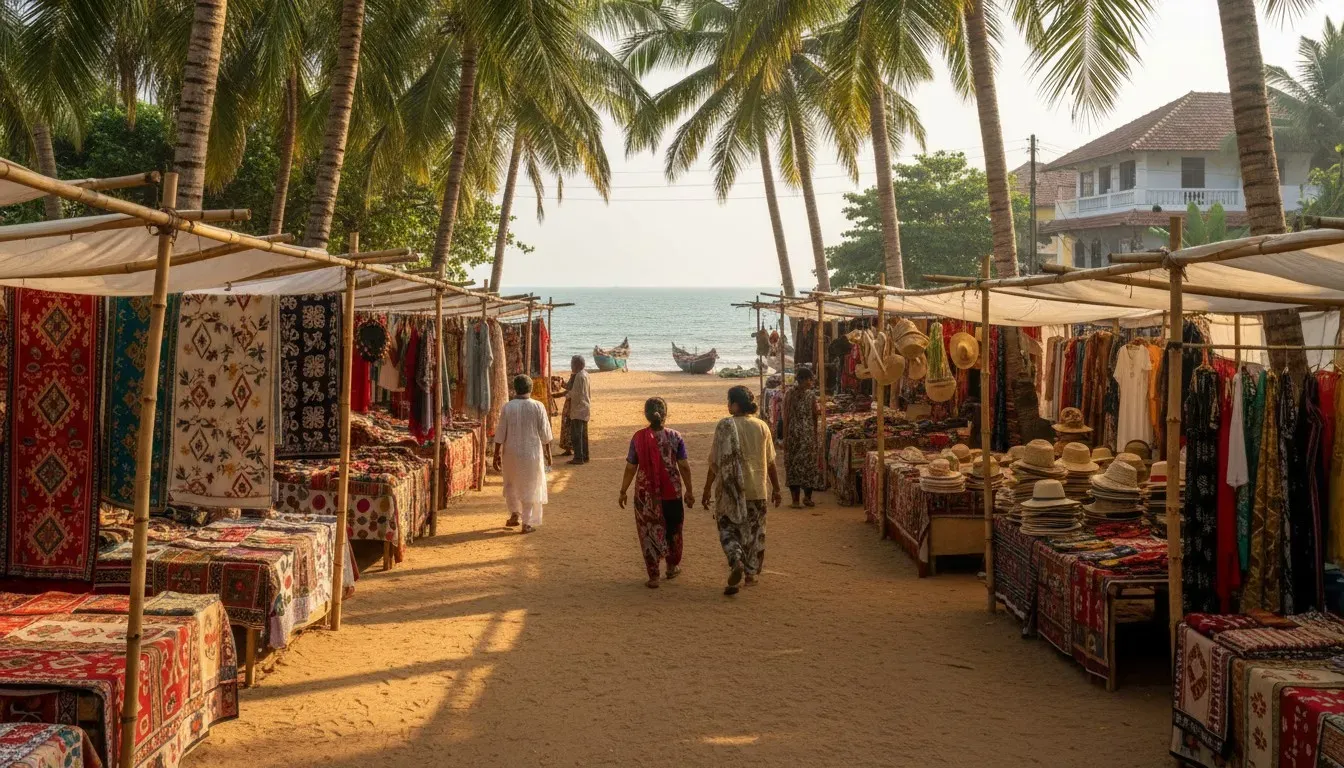


Stall setups begin at 7:30 AM, with peak foot traffic running from 11:00 AM to 4:00 PM before closing at sunset around 6:00 PM to 7:00 PM. The market shuts down completely during the monsoon season between May and September.
This guide covers exact opening hours, route distances from major transit hubs, merchandise details, payment norms, and practical rules to know before you visit.
Operating Days, Hours, and Best Time to Visit
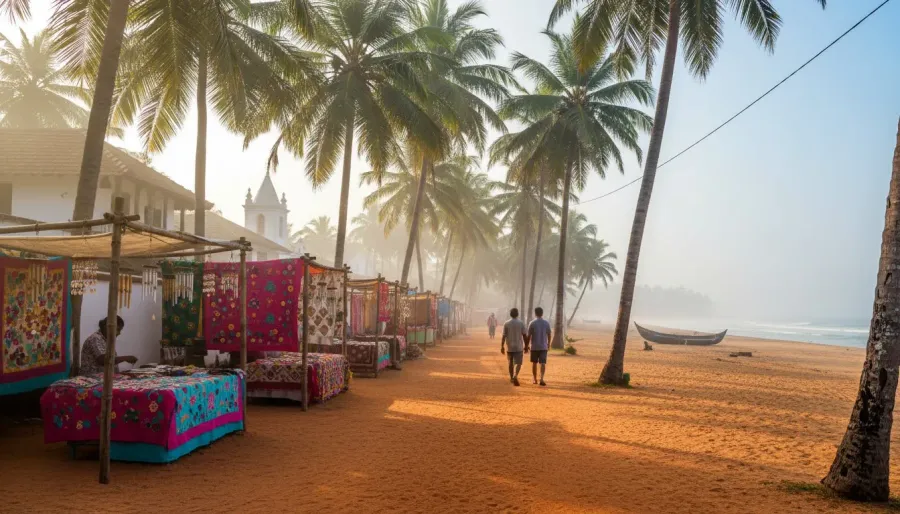
The market trades strictly once a week on Wednesdays. On every other day of the week, the site remains closed to commercial market activity.
While vendors open stalls from 8:00 AM or 9:00 AM until sunset (around 6:00 PM to 6:30 PM), ambient temperatures and foot traffic peak sharply between 11:30 AM and 3:30 PM. Arriving early between 8:30 AM and 10:30 AM gives you cooler temperatures, less congested walkways, and first pick of vendor displays.
The annual operating window runs through Goa's dry tourist season from late October or November through April or early May. The most favorable months are November through February, when the region experiences dry conditions and lower humidity levels. Plan your trip with our guide to the best time to visit Goa.
- Operating day: Every Wednesday only
- Operating hours: 8:00 AM / 9:00 AM to sunset (6:00 PM – 7:00 PM)
- Setup starts: 7:30 AM to 8:00 AM
- Peak crowd window: 11:00 AM to 4:00 PM
- Annual season: Late October / November through April (closed May/June through September)
- Entry fee: Free entry for all visitors
Location and Travel Distances
The market is situated on an open ground at the southern end of Anjuna Beach in Bardez. If you are staying in the popular coastal belts of Calangute, Baga, or Vagator, the market is a short drive away.
Public bus passengers can board a Kadamba or private bus service from Panaji or Mapusa heading to the Anjuna bus stop. From the bus stop, reaching the market requires a 1.5 to 2 km walk or a short ride via a local auto-rickshaw. Paid parking plots for two-wheelers and cars are managed on private plots and village panchayat lots along the access roads leading down to the beach at Monteiro Vaddo. For general transit advice, read our guide on getting around Goa.
| Origin | Distance | Estimated Travel Time |
|---|---|---|
| Vagator Beach | 3 to 4 km | 10 minutes |
| Baga Beach | 6 to 7 km | 15 to 20 minutes |
| Calangute Beach | 8 to 9 km | 20 to 25 minutes |
| Mapusa Bus Terminal | 8 to 10 km | 15 to 25 minutes |
| Panaji (via NH 66) | 18 to 20 km | 35 to 50 minutes |
| Thivim Railway Station (THVM) | 18 to 20 km | 40 to 50 minutes |
| Manohar International Airport (GOX / Mopa) | 30 to 32 km | 45 to 55 minutes |
| Dabolim Airport (GOI) | 43 to 50 km | 1 hour 15 min to 1 hour 30 min |
History and Origins
The market originated in the late 1960s and early 1970s as a casual gathering point for foreign budget travelers and hippies. Around 1975, American expat Yertward Mazamanian, widely remembered as 'Eight Finger Eddie', helped formalize the weekly gathering.
In its earliest form, the event operated as an informal barter and second-hand sale site. Backpackers sold personal belongings, including wristwatches, used jeans, cameras, and guitars, to raise funds for their ongoing travels across India. Over the decades, it transformed into a structured weekly bazaar hosting traders, traditional craftsmen, and artisans from across the country.
What to Buy and Experience
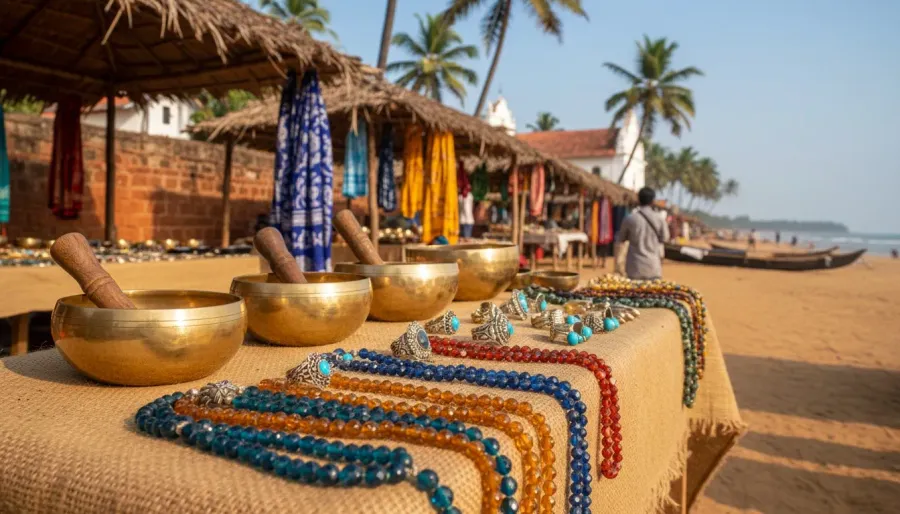
The market brings together merchants and artisans from Indian states like Kashmir, Rajasthan, and Karnataka, alongside foreign craftspeople and jewelers who reside in Goa during the winter season.
You can also find stalls offering temporary henna tattooing, hair braiding, and dreadlocking services. Bordering food shacks and beach kiosks serve local Goan staples like fish thali and vindaloo, as well as continental bakery goods and Middle Eastern snacks.
- Textiles: Cotton clothing, tie-dye apparel, and Rajasthani bedspreads
- Handicrafts: Brass statues, Tibetan singing bowls, and carved decor
- Jewelry: Handmade silver jewelry, beadwork, and custom pieces by resident foreign artisans
- Personal styling services: Henna tattoos, dreadlocking, and hair braiding
- Food kiosks: Goan fish thali, vindaloo, continental bakeries, and Middle Eastern dishes
Money, Payments, and Photography Etiquette
Transactions across the market are conducted primarily in Indian Rupees (INR) using cash or Indian UPI QR codes. Small vendors rarely carry card-swiping POS machines, and debit or credit card terminals regularly fail due to uneven mobile data connectivity on the beach strip. Bring enough paper cash along with your UPI app.
Photography requires basic courtesy. Customary etiquette across the market expects visitors to request verbal permission from stallholders before taking close-up photographs of their handmade crafts, jewelry, or stall setups.
Safety, Local Laws, and Terrain Advice
The ground surface inside the market consists of loose sand, unpaved red dirt, and exposed roots in uneven coconut groves. These surfaces are difficult to navigate with wheeled baby strollers or standard wheelchairs.
Local police advisories instruct visitors to keep mobile phones, wallets, and bags closely secured against pickpocketing in crowded aisles. You can read broader safety rules in our Goa travel tips.
Keep statutory regulations in mind: under the Goa Tourist Places (Protection and Maintenance) Act, consuming alcohol in open public areas and breaking glass bottles carries fines ranging from ₹5,000 to ₹1,00,000. Single-use plastic carry bags and littering are strictly prohibited under state environmental laws.
Finally, take care if you walk onto the adjoining shore. Anjuna Beach contains submerged laterite rocks and strong rip currents. Drishti Marine lifeguards monitor the beach, and swimming is strictly restricted in non-designated or red-flagged rocky zones. Explore more coastal options in our guide to Goa beaches.
Organized Tours and Transit Options
If you prefer not to drive a scooter or navigate traffic yourself, organized day excursions can drop you right near the market. For budget-conscious visitors, the organized North Goa Tour is available at ₹400 per person. Private scheduled day tours covering North Goa sites, including Anjuna, start around ₹2,599 for up to four passengers in a sedan cab as of 2025–2026.
For travelers coming straight from Dabolim Airport, official pre-paid taxi fares to Anjuna Beach range from ₹1,200 to ₹1,600 for a one-way transfer. If you plan to explore nearby coastal stretches afterwards, Ozran Beach (Little Vagator) and Big Vagator Beach are just 3.5 to 4 km north along the coastal road. Check our places to visit in Goa for nearby attractions.
Book with GoaWala
3 options from ₹400 per person — live prices, October 2026.
- North Goa Tour — from ₹400 per person · 9 Hours · North Goa
- South Goa Tour — from ₹400 per person · 9 Hours · South Goa
- Extreme South Goa Tour — from ₹1,500 per person · 10 Hours · South Goa
Frequently asked questions
Which day is the Anjuna Flea Market open?
The flea market is open only on Wednesdays. It does not operate on any other day of the week.
Is there an entry fee for the Anjuna Flea Market?
No, entry to the open-air market grounds is free of charge for all visitors.
Is the market open during the monsoon season?
No. The market runs seasonally from late October or November through April and is completely closed from May or June through September during the monsoon.
Can I pay by credit card at the stalls?
Credit and debit card terminals are rare due to weak mobile data coverage. Most vendors accept cash in Indian Rupees or domestic UPI QR code transfers.
What are the operating hours of Anjuna Flea Market?
Vendors operate from 8:00 AM or 9:00 AM until sunset, around 6:00 PM to 7:00 PM, with peak crowd density occurring between 11:00 AM and 4:00 PM.
Can I swim at Anjuna Beach next to the market?
Swimming is restricted in rocky and red-flagged zones due to submerged laterite rocks and strong rip currents monitored by Drishti Marine lifeguards.
Sources
- marketsbelong.com
- oneboard.app
- tourtravelworld.com
- goa-tourism.org.in
- miagoaairport.com
- abhibus.com
- hippie-inheels.com
- sfgate.com
- youtube.com
- tripoto.com
- trekgo.in
- thrillophilia.com
- trip101.com
- thehindu.com
- thegoan.net
Last checked 5 October 2026