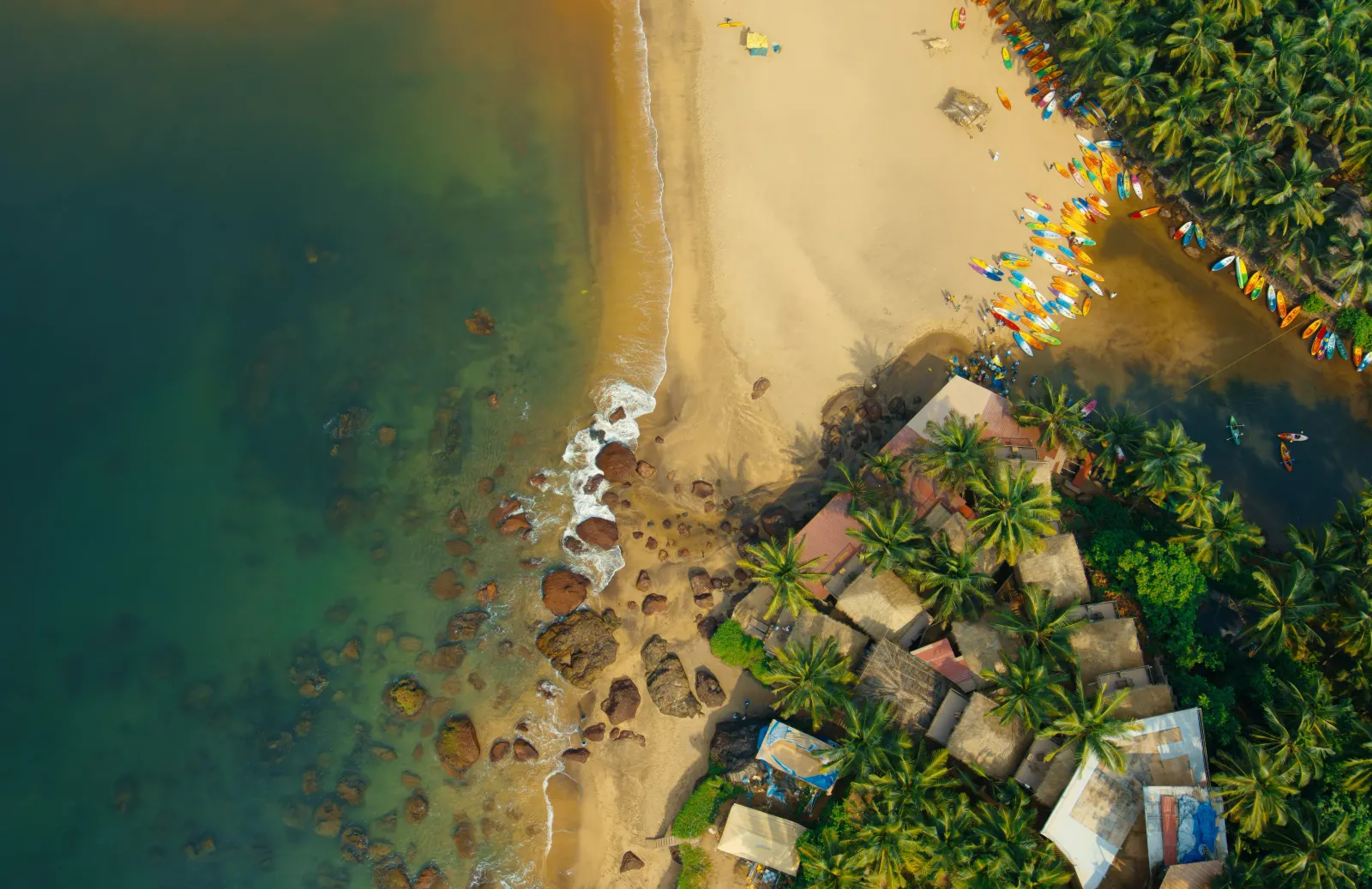


Whether you want to witness the illuminated floats of the Goa Carnival, watch the water processions of São João, or participate in centuries-old traditions like Divar Island's Bonderam, timing your trip around these dates gives direct access to local Goan culture.
Use this comprehensive guide to check festival dates, daily schedules, venue locations, and entry rules across the year, or coordinate your schedule alongside our best time to visit Goa and Goa travel guide.
Book with GoaWala
10 options from ₹400 per night — live prices, October 2026.
- North Goa Tour — from ₹400 per person · 9 Hours · North Goa
- South Goa Tour — from ₹400 per person · 9 Hours · South Goa
- Extreme South Goa Tour — from ₹1,500 per person · 10 Hours · South Goa
- Arpora 3-Bedroom Private Pool Villa — from ₹30,000 per night for the whole villa · Arpora, near Baga, North Goa
- Villa Saligao — 4-Bedroom Private Pool Villa — from ₹30,000 per night for the whole villa · Saligao, near Calangute, North Goa
- Vitamin Arpora — 3-Bedroom Pool Villa — from ₹30,000 per night for the whole villa · Arpora, near Baga, North Goa
- Parra House — 5-Bedroom Boutique Villa — from ₹50,000 per night for the whole villa · Parra, North Goa
- Lux Villa — 5-Bedroom Pool Villa near Baga — from ₹60,000 per night for the whole villa · Arpora, near Baga, North Goa
- Casa Arpora — 10-Bedroom Luxury Pool Villa — from ₹67,000 per night for the whole villa · Arpora, near Baga, North Goa
- Arpora House — 8-Bedroom Villa with Pool & Jacuzzi — from ₹80,000 per night for the whole villa · Arpora, near Baga, North Goa
Annual Goa Festivals Calendar at a Glance
The schedule below details the major religious, cultural, and civic festivals celebrated across Goa, including month of occurrence, primary location, and admission charges.
| Festival | Timing / Month | Primary Venue | Entry / Viewing Fee |
|---|---|---|---|
| Feast of the Three Kings | January 6 | Cuelim Hill, Cansaulim (Mormugao) | Free |
| Lokotsav | January / February (10 days) | Darya Sangam, Kala Academy, Panaji | Free |
| Goa Carnival (Viva Carnaval) | February (pre-Lent) | Panaji, Margao, Vasco, Mapusa | Free street viewing (Red & Black Dance ₹100) |
| Shigmo (Shigmotsav) | March (Phalguna) | Panaji, Ponda, Margao, and 16 towns | Free |
| Zambaulim Gulal | March (Phalguna) | Shree Damodar Temple, Zambaulim | Free |
| Shirgao Jatra | Late April / Early May | Shree Lairai Temple, Shirgao (Bicholim) | Free |
| Milagres Feast | 16 days after Easter (April/May) | St. Jerome Church, Mapusa | Free |
| São João | June 24 | Chapora River / St. Anthony's, Siolim | Free riverbank viewing |
| Chikal Kalo | July (Ashadh 11th–12th) | Shree Devaki Krishna Temple, Marcel | Free |
| Touxeachem Fest | Last Sunday of July / July 26 | Church of St. Anne, Talaulim | Free |
| Malar Bonderam | 3rd Saturday of August | São Matias, Divar Island | Free |
| Bonderam Festival | 4th Saturday of August | Piedade, Divar Island | Free |
| Vasco Damodar Saptah | August (Shravan 6th) | Shree Damodar Temple, Vasco da Gama | Free |
| Monti Saibinichem Fest | September 8 | Parish churches (e.g., Chinchinim) | Free |
| Narkasur Chaturdashi | October / November (Diwali Eve) | Towns across North and South Goa | Free |
| Tripurari Poornima | November (Kartik Full Moon) | Valvanti River, Sanquelim (Bicholim) | Free |
| International Film Festival (IFFI) | November 20–28 | ESG Complex & INOX, Panaji | ₹1,180 delegate fee (Free for film students) |
| Feast of St. Francis Xavier | December 3 (Novena starts Nov 24) | Basilica of Bom Jesus, Old Goa | Free church entry |
| Serendipity Arts Festival | Mid-December (8–10 days) | Mandovi Riverfront venues, Panaji | Free (online registration required) |
Winter Festivals: Feasts, Parades & Cultural Arts (November to February)
The winter dry season hosts Goa's largest public assemblies, starting with cinema and sacred church commemorations before transitioning into carnivals and folk festivals.
From November 20 to November 28, the International Film Festival of India (IFFI) operates along Dayanand Bandodkar Marg (D.B. Marg) in Panaji at venues including INOX Panaji, Maquinez Palace, and the Entertainment Society of Goa complex. Cinephiles and non-film industry professionals pay a delegate registration fee of ₹1,180 (including 18% GST), while accredited cinema students register for free.
On December 3, Tiswadi taluka hosts the Feast of St. Francis Xavier at the Basilica of Bom Jesus in Old Goa (10 km east of Panaji via NH 748). Preceded by a nine-day novena beginning November 24 with the Maddi ceremony, the feast draws thousands of pilgrims. Masses run from 3:45 AM or 4:00 AM to 6:15 PM, with the Solemn Feast Mass celebrated at 10:30 AM. Traffic police enforce closures between the Old Goa church junction and Gandhi Circle, while Kadamba Transport Corporation (KTCL) operates direct shuttle buses from Panaji and Margao depots to terminals at Kunkolkar School grounds. Visitors can also tour the adjacent ASI Archaeological Museum at the Convent of St. Francis of Assisi, open Saturday through Thursday from 9:00 AM to 5:00 PM (closed Fridays) for ₹10 per Indian citizen and ₹100 per foreign visitor.
Mid-December brings the Serendipity Arts Festival, an 8 to 10 day multidisciplinary arts showcase held across Mandovi riverfront venues in Panaji, including the Old GMC Complex and DB Ground, offering free public admission through advance online registration.
In January, the Feast of the Three Kings is observed on January 6 at the 1599 Chapel of Nossa Senhora dos Remedios on Cuelim Hill in Cansaulim (15 to 16 km northwest of Margao via MDR 43). Three village boys aged 8 to 12 from Cansaulim, Arossim, and Cuelim ascend the hill on horseback dressed as the Magi to deliver gifts at the 10:30 AM morning Mass. Also in January or February, the Directorate of Art and Culture runs Lokotsav, a 10-day national folk crafts fair at Darya Sangam inside the Kala Academy complex in Panaji, featuring approximately 500 artisan stalls open daily from 10:00 AM to 10:00 PM with free admission.
In February, the state-sponsored Goa Carnival (Viva Carnaval) runs over four pre-Lenten days prior to Ash Wednesday. Major civic float parades led by King Momo take place across Panaji, Margao, Vasco da Gama, and Mapusa. The primary procession in Panaji moves along a 4 km stretch of Dayanand Bandodkar Marg from Patto Bridge or the Old Secretariat to the Kala Academy in Campal starting at 3:30 PM. This roadway is closed to private vehicles during the parade, and drivers operating parade floats must possess commercial driving licences and fitness certificates. Street viewing is free. The celebration concludes with the open-air Red and Black Dance at Samba Square (Garcia de Orta Garden) in Panaji, which requires attendees to wear red and black attire and pay an admission charge of ₹100 per person.
- Plan for road diversions along D.B. Marg in Panaji on the opening Saturday of Goa Carnival.
- Use KTCL shuttle services when visiting Old Goa during the Novena and December 3 feast day.
- Attend the early 10:30 AM Mass at Cuelim Hill to see the Three Kings horse procession arrive at the chapel.
Spring Festivals: Shigmo Street Parades & Temple Jatras (March to May)
Spring shifts focus toward temple traditions and civic celebrations across Goa's inland talukas.
Shigmotsav (Shigmo) is a 14-day spring festival organized during the Hindu month of Phalguna (March) across 19 municipal centres, beginning in Ponda and concluding in Pernem. Parades mandated by the Goa Tourism Department begin at 4:00 PM and run through 10:00 PM with free public access. Processions feature mythological floats and folk troupes performing Romtamel, Ghode Modni, and Fugdi. Official government guidelines limit Romtamel troupes to a maximum of 150 members per contingent. Simultaneously, Zambaulim Gulal takes place over seven days at the Shree Damodar Temple in Zambaulim, Quepem taluka (21 km southeast of Margao). Margao business establishments close on Tuesday as crowds gather along the Kushavati River to smear red and pink gulal powder on the deity's palkhi (palanquin).
As temperatures rise in April and May, two key gatherings draw worshippers to North Goa:
The Shirgao Jatra (Lairai Devi Zatra) takes place on Vaishakh Shukla Panchami in Shirgao village, Bicholim taluka (28 to 30 km northeast of Panaji). Fasting devotees known as dhonds perform rituals culminating between 3:30 AM and 4:00 AM, walking barefoot over a designated pit of burning charcoal embers called the homkund. Entry to the temple grounds is free.
On the 16th day after Easter Sunday (April or May), the Milagres Feast (Feast of Our Lady of Miracles) is held at St. Jerome Church in Mapusa, Bardez taluka (13 km north of Panaji via NH 66). Masses begin at 5:30 AM. Both Catholic and Hindu devotees line up to pour offerings of coconut oil over the statue of Our Lady of Miracles, and visitors can browse a sprawling outdoor church fair.
Monsoon Festivals: River Floats, Mud Games & Flag Pageantry (June to August)
Monsoon transforms Goa's landscape and brings active, community-driven village traditions. If you plan your travel during the rains, you can combine these unique seasonal gatherings with our things to do in Goa and South Goa sightseeing tour options.
On June 24, São João honors St. John the Baptist across Goa. The central celebration takes place in Siolim, Bardez taluka (7 to 8 km north of Mapusa). Spectators gather along the banks of the Chapora River tributary outside St. Anthony's Church from 3:00 PM to 3:30 PM for the Sangodd (decorated boat parade) and music performances until sunset. Participants wear freshly woven flower headbands called kopels and leap into rain-filled domestic wells. Note that jumping into private wells is prohibited without explicit permission from property owners, and non-slip footwear is essential on wet river embankments.
In July, on the 11th and 12th days of the Hindu month of Ashadh, the village of Marcel in Ponda taluka (16 to 17 km east of Panaji via NH 748) hosts Chikal Kalo on the grounds of the Shree Devaki Krishna Temple. Devotees coat their skin with sesame oil for protection before participating in traditional mud games such as chendu fali and gilli danda, alongside Dahi Handi celebrations starting at 11:00 AM. Spectator viewing is free.
On the last Sunday of July (or July 26), the Touxeachem Fest (Cucumber Feast) is observed at the 16th-century Church of St. Anne in Talaulim, Tiswadi taluka (12 km southeast of Panaji). Couples seeking children present fresh cucumbers at the church altar while reciting the traditional Konkani-Portuguese verse, "Senhora, tomai pepino, dai me menino" (Lady, take this cucumber, give me a child).
August brings two island celebrations and an extended commercial bazaar:
Divar Island, located on the Mandovi River in Tiswadi taluka, hosts two separate editions of the Bonderam Festival. The island has no road bridge and must be reached via free vehicle and passenger roll-on/roll-off ferries operated by the River Navigation Department from Ribandar (5 km east of Panaji) or Old Goa (two-wheelers and pedestrians ride free; four-wheelers pay ₹10). On the third Saturday of August, São Matias (Malar village) hosts Malar Bonderam with ward float parades from 3:00 PM to 5:30 PM behind barricades. On the fourth Saturday of August, the Bonderam Flag Festival takes place in Piedade village. Beginning with an early morning brass band (Alvorada), the event commemorates historical Portuguese-era land boundary disputes with a 3:00 PM flag parade and floats. While mock battles historically used toy bamboo popguns (fotashes) to shoot wild seeds, organizers now permit only decorative bamboo stems to prevent eye injuries. Piedade village roads are closed to vehicular traffic from 1:30 PM to 10:30 PM on festival day.
In Vasco da Gama, the Vasco Damodar Saptah begins on the sixth day of the Hindu month of Shravan at the Shree Damodar Temple on Swatantra Path (30 km southwest of Panaji). It includes 24-hour continuous bhajan recitations and a week-long street fair running day and night along Swatantra Path with free entry.
- Reach Divar Island ferry terminals at Ribandar or Old Goa well before 1:30 PM on Bonderam festival Saturdays to avoid traffic queues.
- Wear non-slip footwear and keep electronic devices in waterproof bags when attending São João or Chikal Kalo.
- Due to rough seas and undercurrents during monsoon festivals, Drishti Marine enforces a strict red-flag 'No Swimming' ban across all Goan beaches from June to August.
Autumn Traditions: Harvest Feasts, Boat Launches & Effigies (September to November)
As the monsoon recedes, Goa observes agricultural thanksgiving and riverfront light festivals:
On September 8, Catholic parishes across the state celebrate the Feast of the Nativity of the Blessed Virgin Mary (Monti Saibinichem Fest). At historic churches like Our Lady of Hope in Chinchinim, Salcete taluka (10 km south of Margao on NH 66), parishioners bring freshly harvested paddy sheaves to morning services starting at 6:00 AM for blessings, symbolizing the start of the harvest season.
On the eve of Diwali (Narkasur Chaturdashi, in October or November), local youth clubs build giant effigies of the demon Narkasur. The effigies are displayed along neighborhood roads and paraded before being ritually set on fire between 4:00 AM and 6:00 AM on Diwali morning across towns in both North and South Goa.
On the full moon night of the Hindu month of Kartik (November), the Tripurari Poornima Boat Festival is organized on the Valvanti River near the Shri Vitthal Temple in Sanquelim, Bicholim taluka (25 to 30 km northeast of Panaji). The event features an evening miniature boat-design competition starting between 7:00 PM and midnight, alongside the symbolic burning of the demon Tripurasur's effigy. Public admission is free.
Festival Travel Rules, Transport Logistics & Local Laws
Attending public festivals in Goa requires awareness of local traffic arrangements, civic laws, and noise regulations.
During large events in Panaji such as the Goa Carnival or IFFI, Dayanand Bandodkar Marg experiences major diversions. For the Carnival float parade, the entire 4 km stretch from Patto to Campal is closed to both private four-wheelers and two-wheelers. Visitors staying in coastal hubs like Candolim or Calangute should use public buses or drop-offs near the Panaji KTC bus terminal and walk to viewing spots. Similarly, Old Goa arterial corridors between the church junction and Gandhi Circle are pedestrianized on December 3, requiring motorists to park at designated outer lots and board KTCL feeder buses.
All festival attendees must adhere to statewide statutory regulations:
Under the Goa Tourist Places (Protection and Maintenance) Act as amended in 2025, consuming alcohol in open public areas, cooking food on beaches or roadsides, and breaking glass bottles carries fines ranging from ₹5,000 to ₹1,00,000.
In compliance with directives from the High Court of Bombay at Goa and the Noise Pollution (Regulation and Control) Rules, 2000, outdoor music stages, parade sound trucks, and open-air public address systems must cease playing music at 10:00 PM sharp, with sound levels capped at 55 dB(A).
- Carry government-issued photo ID when registering as an attendee or delegate at ticketed cultural events like IFFI.
- Plan your return transport before 10:00 PM, when outdoor festival sound stages shut down and street crowds disperse.
- Check vehicle ferry timing boards at Ribandar when crossing to Divar Island to avoid evening queues.
Frequently asked questions
When does the Goa Carnival parade take place?
The Goa Carnival float parades run over four days in February (or early March) immediately preceding Ash Wednesday, with the main Panaji parade starting at 3:30 PM along Dayanand Bandodkar Marg.
How do you reach Divar Island for the Bonderam Festival?
Divar Island has no bridge access; you must board government ferries operated by the River Navigation Department from Ribandar jetty (5 km east of Panaji) or Old Goa jetty. Ferry transit is free for pedestrians and two-wheelers, and ₹10 for four-wheelers.
What time is the fire-walking ritual at Shirgao Jatra?
The homkund ritual, where fasting dhonds run barefoot across hot charcoal embers at the Shree Lairai Temple in Shirgao, takes place between 3:30 AM and 4:00 AM on Vaishakh Shukla Panchami (late April or early May).
Are there entry fees to watch the Shigmo street parades?
No, Shigmotsav float and folk-dance street parades organized by the Goa Tourism Department in Panaji, Ponda, Margao, and other municipal towns are free for public street viewing.
What is the tradition of Touxeachem Fest in Talaulim?
Held on the last Sunday of July at the Church of St. Anne in Talaulim, Touxeachem Fest involves childless couples offering fresh cucumbers at the church altar while reciting 'Senhora, tomai pepino, dai me menino'.
What is the delegate fee for the International Film Festival of India (IFFI)?
General delegate registration for cinephiles at IFFI in Panaji costs ₹1,180 (including 18% GST), while accredited cinema students can register free of charge.
What are the rules regarding public alcohol consumption at Goan festivals?
Under the Goa Tourist Places Act amended in 2025, consuming alcohol in open public areas, cooking food outdoors, or breaking glass bottles carries fines ranging from ₹5,000 to ₹1,00,000.
Sources
- tripoto.com
- happyfares.in
- memorableindia.com
- theindia.co.in
- indiatimes.com
- traveltradejournal.com
- offbeatpeak.com
- indiatimes.com
- oneboard.app
- oneboard.app
- mysimplesojourn.com
- malarbonderam.com
- savaari.com
- gomantaktimes.com
- wordpress.com
- facebook.com
- orangewayfarer.com
- scribd.com
- scribd.com
- scribd.com
Last checked 3 October 2026